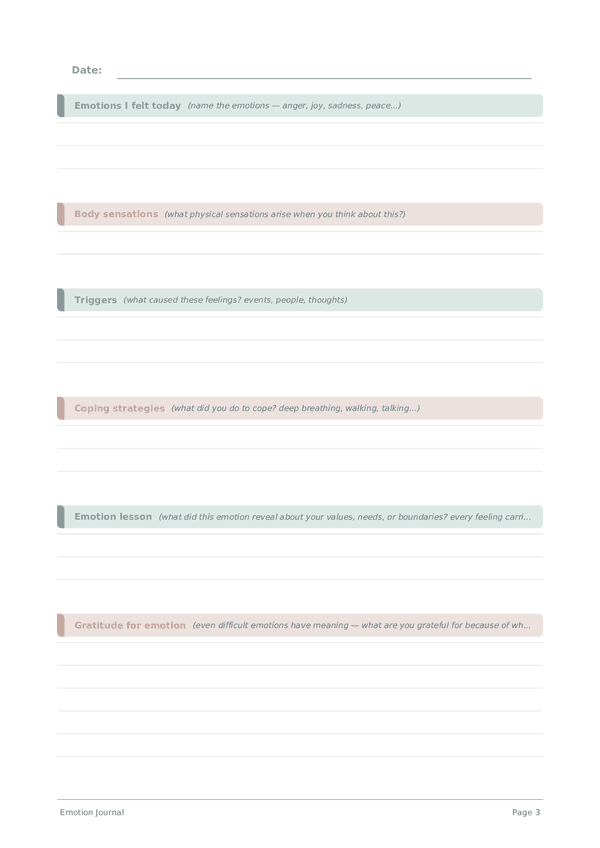
Printable Emotion Journal
Understand, process, and grow through your emotions
Explore the full spectrum of your emotional life with this science-backed daily journal. Name what you feel, locate it in your body, uncover what triggered it, discover how you coped, extract the lesson it carries, and find gratitude even in difficulty. Built on evidence-based emotional intelligence practices used by therapists and mindfulness coaches.
Customize fields
Toggle fields on or off. Click the pencil to rename, or add your own fields.
Benefits
How to Use
What is this journal?
An emotion journal is a therapeutic writing practice focused specifically on understanding and processing your emotional experiences. Unlike a mood tracker that captures a snapshot, this journal invites you to explore the full texture of your feelings — what you felt, where you felt it in your body, what triggered it, and what it can teach you.
Emotional awareness is the foundation of emotional intelligence. Research by psychologist James Pennebaker has shown that expressive writing about emotions significantly reduces anxiety, improves immune function, and enhances overall wellbeing. The key is not just naming emotions but exploring them with curiosity rather than judgment.
This journal guides you through six focused sections: identifying emotions, noticing body sensations, exploring triggers, documenting coping strategies, extracting lessons, and finding gratitude within emotional experiences. This structured approach transforms overwhelming feelings into manageable insights.
Filled example
Here's what a typical entry looks like when filled in:
How to fill in each field
Each day you'll find several labeled sections with lines for writing. Here's what each section is for:
Emotions I felt today
Name the specific emotions you experienced. Research shows that labeling emotions reduces their intensity and increases self-awareness.
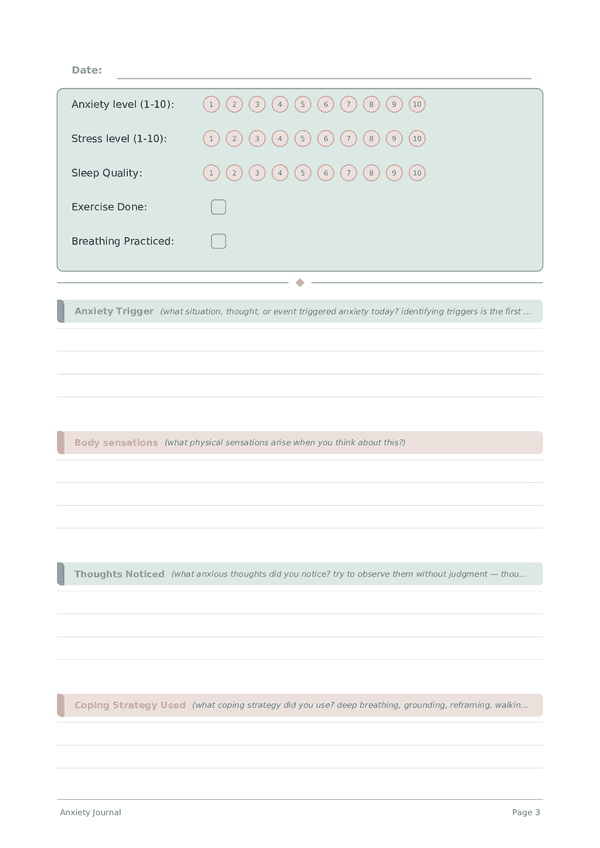
Body sensations
What physical sensations arise when you think about this?
Triggers
Identify what caused your emotional reactions — events, people, thoughts, environments. Recognizing triggers gives you the power to prepare for or avoid them.
Coping strategies
What did you do to cope? Deep breathing, walking, talking...
Emotion lesson
What did this emotion reveal about your values, needs, or boundaries? Every feeling carries a message worth hearing
Gratitude for emotion
Even difficult emotions have meaning — what are you grateful for because of what you felt today?
Tips for success
When and how often to write
Write at the end of your day, when emotions from the day are still fresh but you have some distance from them. If a strong emotion hits during the day, jot a quick note to expand on later. Daily practice is ideal for building emotional awareness, but even 3–4 times per week will sharpen your ability to name and navigate feelings.