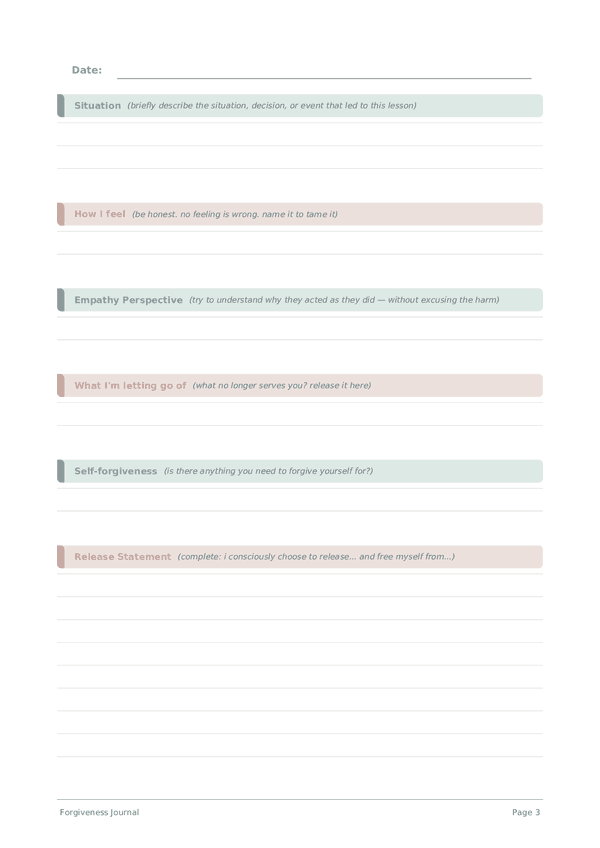
Printable Forgiveness Journal
Guided forgiveness practice and emotional release journal
Free yourself from resentment through guided forgiveness journaling. Based on the REACH model of forgiveness, explore your feelings, develop empathy, and make the conscious choice to release what no longer serves you.
Customize fields
Toggle fields on or off. Click the pencil to rename, or add your own fields.
What is this journal?
A forgiveness journal is a guided writing practice for processing hurt and resentment through structured reflection. Each entry invites you to explore a situation that caused pain, examine your feelings, practice empathy, and work toward releasing the emotional weight you carry.
This journal is for anyone holding onto grudges, past wounds, or self-blame that drains their energy and limits their present. Forgiveness does not mean excusing harmful behavior — it means choosing to free yourself from the ongoing burden of resentment. This journal supports both forgiving others and forgiving yourself.
Research from Stanford's Forgiveness Project shows that structured forgiveness practices reduce anger, stress, and depression while increasing optimism and self-confidence. The process of writing about pain with the explicit intention of release activates different neural pathways than rumination, turning repetitive hurt into progressive healing.
Filled example
Here's what a typical entry looks like when filled in:
How to fill in each field
Each day you'll find several labeled sections with lines for writing. Here's what each section is for:
Situation
Describe the situation or event objectively, as if you're a neutral observer. Separating facts from feelings helps you see things more clearly.
How I feel
Describe how you feel right now in your own words. There are no wrong answers. Simply putting feelings on paper reduces their emotional charge.
Empathy Perspective
Try to understand why they acted as they did — without excusing the harm
What I'm letting go of
Write down something you're ready to release — a worry, resentment, or expectation. Naming what you're letting go of is the first step toward freedom from it.
Self-forgiveness
Is there anything you need to forgive yourself for?
Release Statement
Complete: I consciously choose to release... and free myself from...
Tips for success
When and how often to write
Write 2-3 times per week, dedicating each entry to one forgiveness topic. This is deep emotional work, and daily entries on the same wound can feel overwhelming. Alternate between forgiving others and forgiving yourself. Spend 15-20 minutes per entry — forgiveness journaling requires more time than typical journals because you need space to process emotions fully. Monthly, re-read your entries to see how your feelings toward specific situations have evolved. Some wounds take months to process; patience with yourself is part of the practice.