Printable Mental Health Journal
A comprehensive daily check-in for your mind
Track mood, anxiety, energy, and sleep in one place to get a holistic view of your mental health. Reflect on your day to build emotional awareness and resilience.
Customize fields
Toggle fields on or off. Click the pencil to rename, or add your own fields.
Benefits
How to Use
What is this journal?
A mental health journal is a structured daily check-in that combines mood and wellness tracking with reflective writing. By rating key indicators like mood, anxiety, energy, and sleep quality each day, you build a longitudinal picture of your emotional landscape and the factors that influence it.
This journal serves anyone invested in their psychological well-being — whether you are managing a diagnosed condition, working through a difficult period, or simply want to understand yourself better. Therapists and counselors frequently recommend journaling as a complement to professional treatment.
Research published in the Journal of Affective Disorders indicates that consistent self-monitoring of mood and emotional states improves emotional regulation and helps people identify early warning signs before a downturn becomes a crisis. The combination of quantitative tracking and qualitative reflection creates both data and narrative — two powerful tools for self-understanding.
Filled example
Here's what a typical entry looks like when filled in:
How to fill in each field
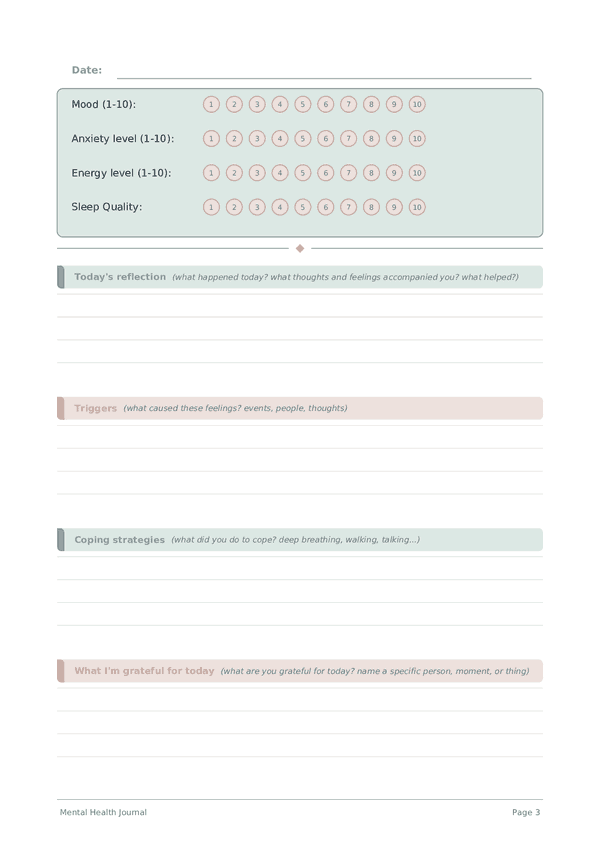
The top of each page has quick-fill fields (ratings, checkboxes, numbers). Below that is a lined section for writing. Here's what each field means:
Mood (1-10)
Rate your overall emotional state for the day. 1 means very low or depressed, 10 means exceptionally happy and positive. Don't overthink — go with your gut feeling.
Anxiety level (1-10)
Rate your anxiety level today. Putting a number on it makes the feeling more manageable and trackable.
Energy level (1-10)
Rate your physical and mental energy level. 1 means exhausted and drained, 10 means fully energized and alert. This helps you identify what activities boost or drain your energy.
Sleep Quality
Rate how restful your sleep was. 1 means terrible and restless, 5 means deep and refreshing. Quality matters as much as quantity.
Today's reflection
Look back at your day honestly. What went well? What could be better? This isn't about judgment — it's about learning and growing.
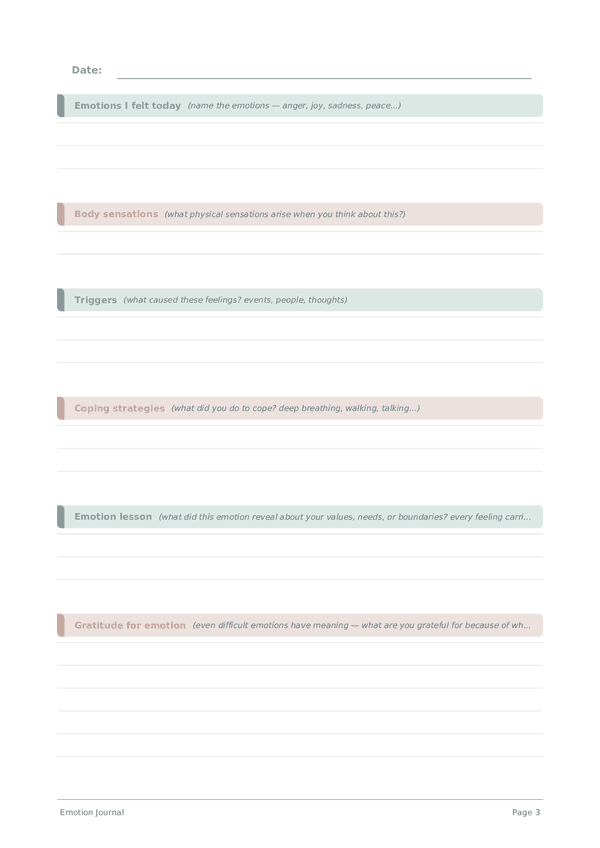
Triggers
Identify what caused your emotional reactions — events, people, thoughts, environments. Recognizing triggers gives you the power to prepare for or avoid them.
Coping strategies
What did you do to cope? Deep breathing, walking, talking...
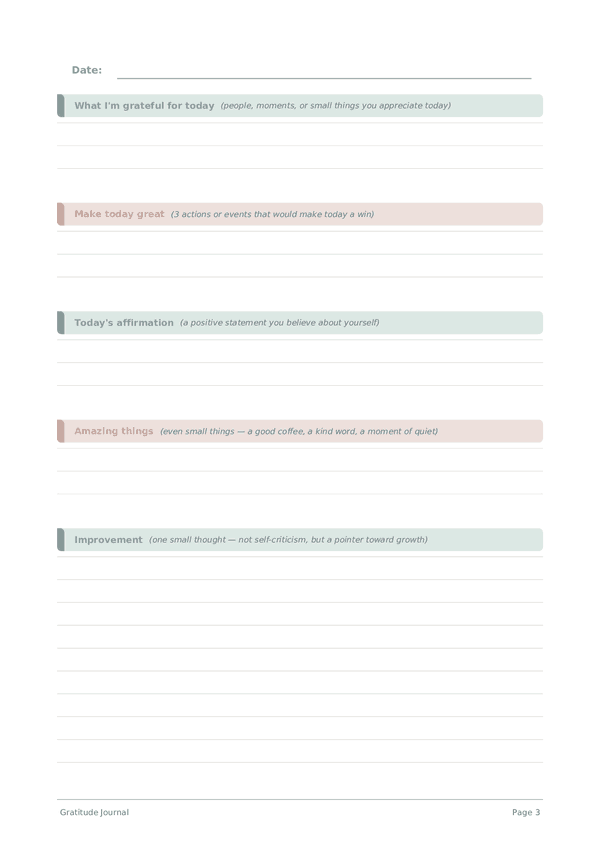
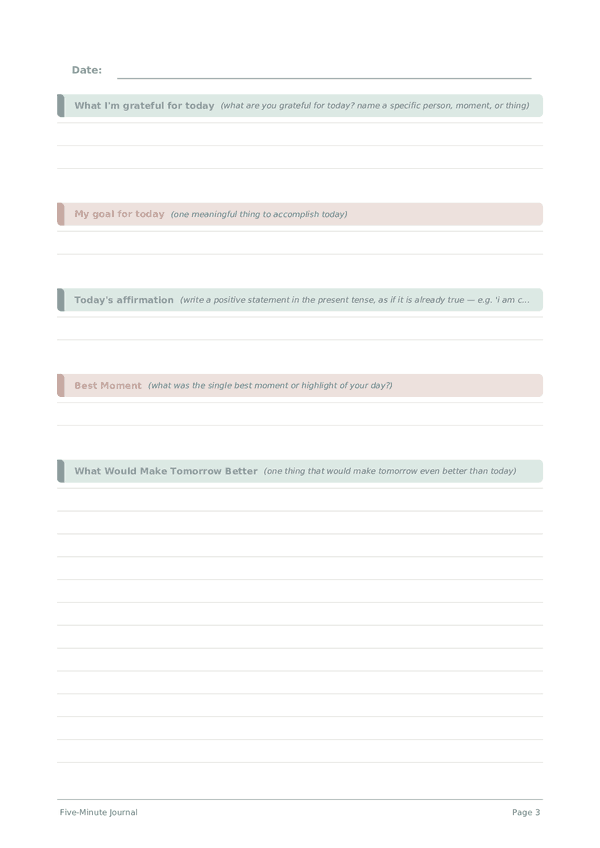
What I'm grateful for today
List 1–3 things you're grateful for today. They can be big or tiny — a good meal, a kind word, sunshine. Gratitude journaling is one of the most scientifically supported well-being practices.
What went well
Even small wins count — name at least one
Tips for success
When and how often to write
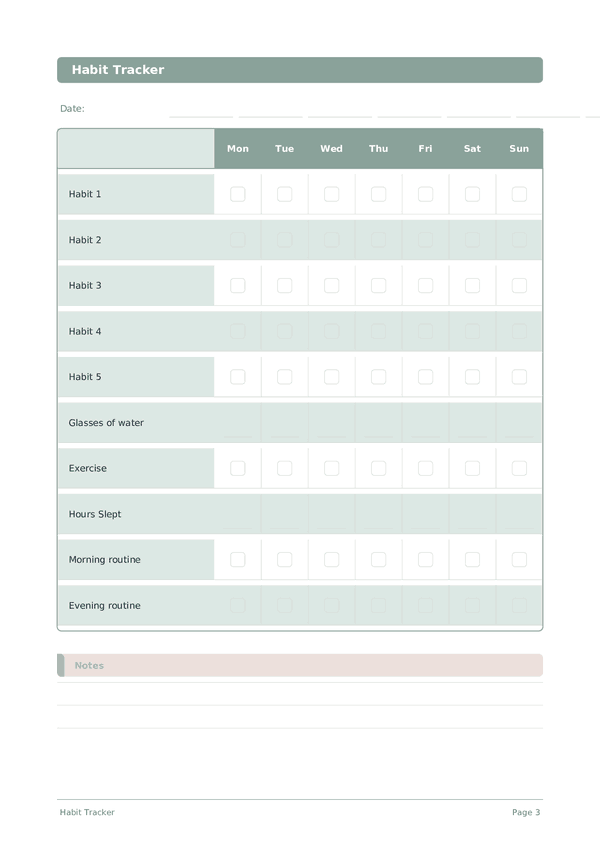
Fill in the tracker daily to build a reliable mental health baseline. The writing section can be brief on good days (2–3 sentences) and longer on hard days (as much as you need). Review weekly to spot trends. If you're in therapy, review your journal before each session — it helps you make the most of your time with your therapist.