Printable Mindfulness Journal
Anchor yourself in the present moment with MBSR-inspired daily writing
The Mindfulness Journal is built on evidence-based principles from Mindfulness-Based Stress Reduction (MBSR), developed by Jon Kabat-Zinn at the University of Massachusetts. Each daily entry guides you through a structured sequence: setting an intention, scanning your body, sharpening sensory awareness, cultivating gratitude, and practicing self-compassion. By writing without judgment, you train your attention to rest in the present — the foundation of every proven mindfulness program.
Customize fields
Toggle fields on or off. Click the pencil to rename, or add your own fields.
Benefits
How to Use
What is this journal?
A mindfulness journal is a daily writing practice designed to anchor you in the present moment and cultivate non-judgmental awareness. Rooted in Buddhist meditation traditions and adapted by modern psychology, mindfulness journaling combines structured reflection with contemplative exercises to reduce mental chatter and increase inner calm.
Research from Harvard Medical School and the University of Massachusetts shows that regular mindfulness practice reduces cortisol levels, shrinks the brain's stress center (amygdala), and strengthens areas associated with attention and emotional regulation. Writing is a particularly effective mindfulness tool because it forces you to slow down and articulate your inner experience.
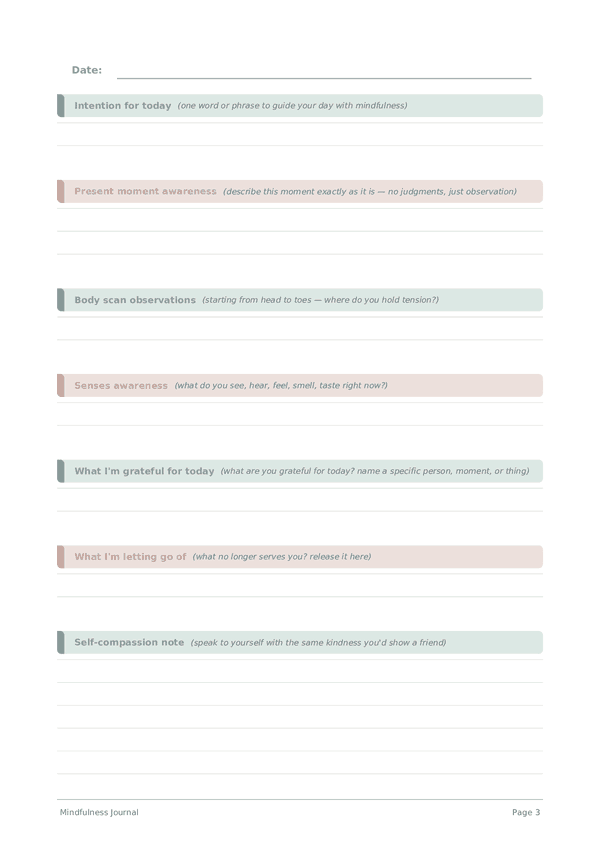
This journal guides you through seven focused sections: setting an intention, present-moment awareness, body scan observations, sensory awareness, gratitude, letting go, and self-compassion. Each section takes just 1-2 minutes, making the entire practice achievable in under 15 minutes.
Filled example
Here's what a typical entry looks like when filled in:
How to fill in each field
Each day you'll find several labeled sections with lines for writing. Here's what each section is for:
Intention for today
One word or phrase to guide your day with mindfulness
Present moment awareness
Describe what you notice right now — sounds, sensations, thoughts. This grounds you in the present and builds mindfulness awareness.
Body scan observations
Scan from head to toes — where is there tension, warmth, numbness, or ease? Simply notice without trying to change anything
Senses awareness
What do you see, hear, feel, smell, taste right now?
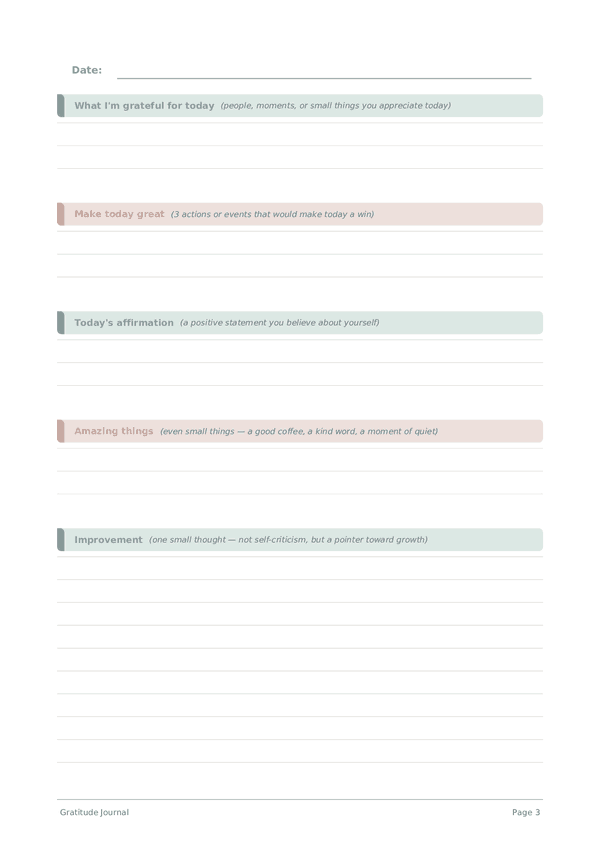
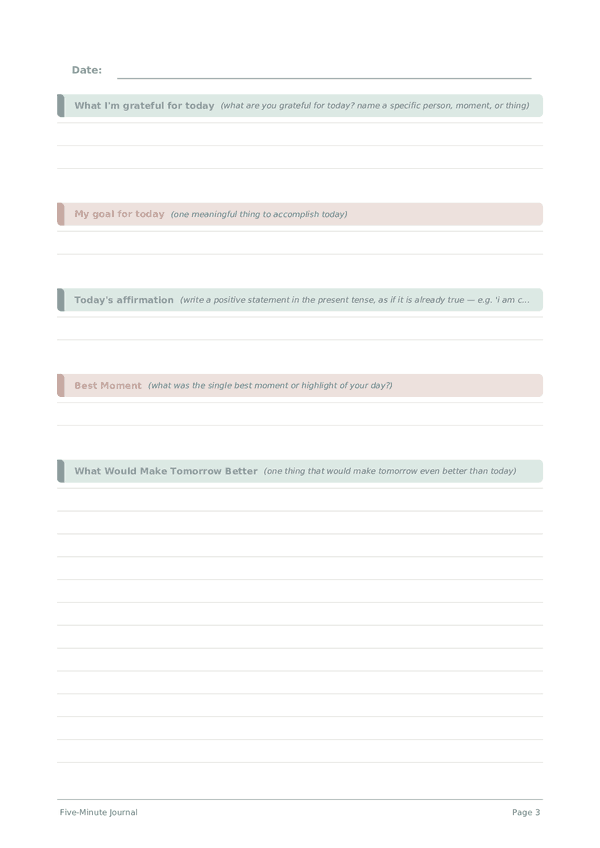
What I'm grateful for today
List 1–3 things you're grateful for today. They can be big or tiny — a good meal, a kind word, sunshine. Gratitude journaling is one of the most scientifically supported well-being practices.
What I'm letting go of
Write down something you're ready to release — a worry, resentment, or expectation. Naming what you're letting go of is the first step toward freedom from it.
Self-compassion note
Speak to yourself with the same kindness you'd show a friend
Tips for success
When and how often to write
Write once a day, ideally right after your meditation or mindfulness practice while awareness is heightened. Morning practice followed by immediate journaling is the most effective pattern — you capture insights while they're vivid. If you don't have a formal practice, use the journal itself as a 5-minute mindfulness exercise: sit, breathe, observe, then write.