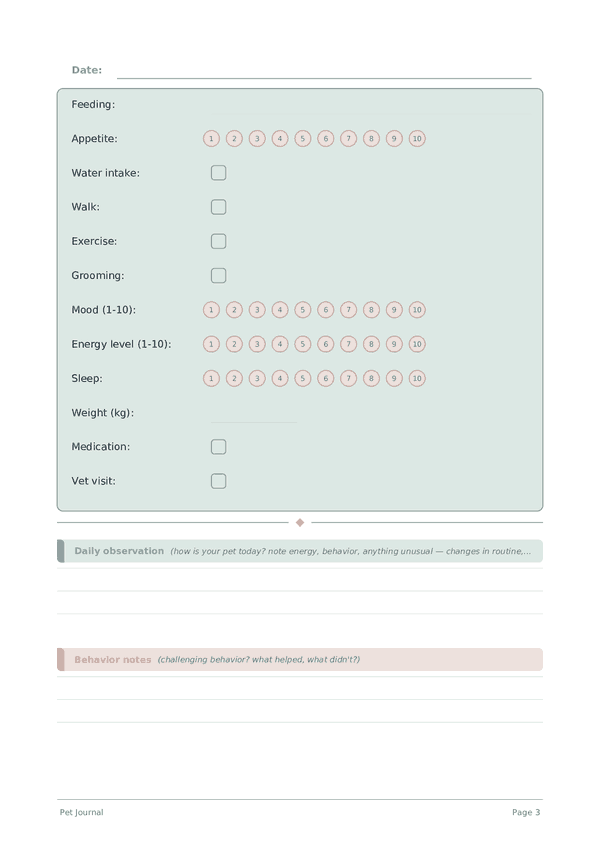
Printable Pet Journal
Daily care log for your furry companion
Track your pet's feeding, walks, grooming, mood, energy, and health in one place. A daily pet journal helps you spot changes early, share accurate info with your vet, and treasure the bond with your companion.
Customize fields
Toggle fields on or off. Click the pencil to rename, or add your own fields.
Benefits
How to Use
What is this journal?
A pet journal is a daily log for tracking your pet's health, behavior, and the moments that make pet ownership joyful. By recording feeding, exercise, mood, and health indicators alongside observations about behavior and highlights, you create both a useful veterinary reference and a cherished record of your life together.
This journal is for devoted pet owners who want to be more attentive to their pet's needs and preserve the memories of their companionship. It is especially valuable for pets with health conditions requiring monitoring, senior pets, new puppies or kittens, and multi-pet households.
Veterinary medicine increasingly emphasizes the value of owner observation logs. Pets cannot describe their symptoms, so detailed daily records of appetite, energy, behavior changes, and bathroom habits often provide the critical data that helps veterinarians catch health issues early — sometimes months before they would otherwise be detected.
Filled example
Here's what a typical entry looks like when filled in:
How to fill in each field
The top of each page has quick-fill fields (ratings, checkboxes, numbers). Below that is a lined section for writing. Here's what each field means:
Feeding
Breast or formula? Note the time, duration, or amount for each feeding
Appetite
How was your pet's appetite today? Rate from 1 (refused food) to 10 (ate eagerly)
Water intake
Did your pet drink enough water today? Note any changes in drinking habits
Walk
Did your pet get a walk today? Even a short outing counts
Exercise
Check off whether you exercised today. Even a 10-minute walk counts. The goal is building awareness of your activity patterns.
Grooming
Did you brush, bathe, or groom your pet today?
Mood (1-10)
Rate your overall emotional state for the day. 1 means very low or depressed, 10 means exceptionally happy and positive. Don't overthink — go with your gut feeling.
Energy level (1-10)
Rate your physical and mental energy level. 1 means exhausted and drained, 10 means fully energized and alert. This helps you identify what activities boost or drain your energy.
Sleep
How many hours did your pet sleep today? Note any restlessness or unusual patterns
Weight (kg)
Record your weight if you're tracking it. Weigh yourself at the same time each day for consistent data. Focus on weekly trends, not daily fluctuations.
Medication
Record medications taken, including name and dosage. Consistent tracking helps you and your doctor evaluate treatment effectiveness.
Vet visit
Did your pet have a vet appointment today? Note the reason and any findings
Daily observation
How is your pet today? Note energy, behavior, anything unusual — changes in routine, new tricks, funny moments
Behavior notes
Challenging behavior? What helped, what didn't?
Pet highlights
Memorable moments, achievements, adventures, or cute things your pet did today
Tips for success
When and how often to write
Make a brief daily entry covering your pet\u2019s mood, appetite, and any notable behavior — this takes just 2-3 minutes and builds an invaluable health baseline. Write detailed entries after vet visits, when introducing new food, or when behavior changes. Weekly, note weight and overall energy level. This journal becomes your pet\u2019s medical autobiography and your most useful tool at the veterinarian\u2019s office.