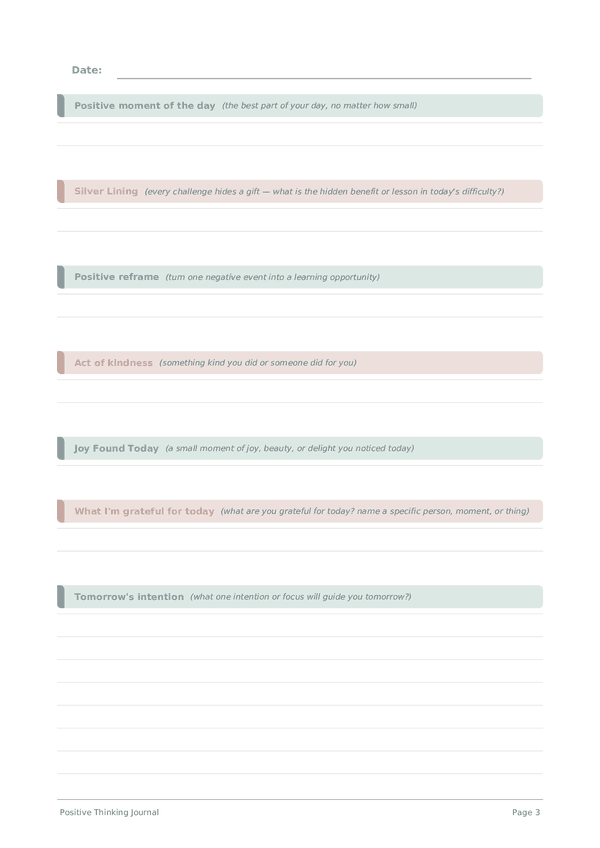
Printable Positive Thinking Journal
Daily positive thinking and optimism practice journal
Train your brain to notice and amplify the good. Build an optimistic mindset through daily recognition of positive moments, reframing challenges, acts of kindness, and intentional gratitude.
Customize fields
Toggle fields on or off. Click the pencil to rename, or add your own fields.
What is this journal?
A positive thinking journal is a daily practice that trains your brain to notice and amplify the good in your life. Each entry guides you through finding silver linings, reframing challenges, and recognizing moments of joy and kindness — gradually shifting your default lens from what is wrong to what is right.
This journal is for anyone who wants to cultivate a more optimistic outlook without ignoring reality. It is especially helpful if you tend toward rumination, pessimism, or simply want to build resilience during uncertain times.
Neuroscience research on neuroplasticity shows that deliberately focusing on positive experiences for even 15-30 seconds strengthens the neural pathways associated with well-being. Over weeks of consistent practice, this journal literally rewires your brain's tendency to scan for threats toward scanning for opportunities and gratitude.
Filled example
Here's what a typical entry looks like when filled in:
How to fill in each field
Each day you'll find several labeled sections with lines for writing. Here's what each section is for:
Positive moment of the day
Describe one positive moment from today, no matter how small. Training your brain to notice good moments shifts your overall outlook toward optimism.
Silver Lining
Every challenge hides a gift — what is the hidden benefit or lesson in today's difficulty?
Positive reframe
Turn one negative event into a learning opportunity
Act of kindness
Something kind you did or someone did for you
Joy Found Today
A small moment of joy, beauty, or delight you noticed today
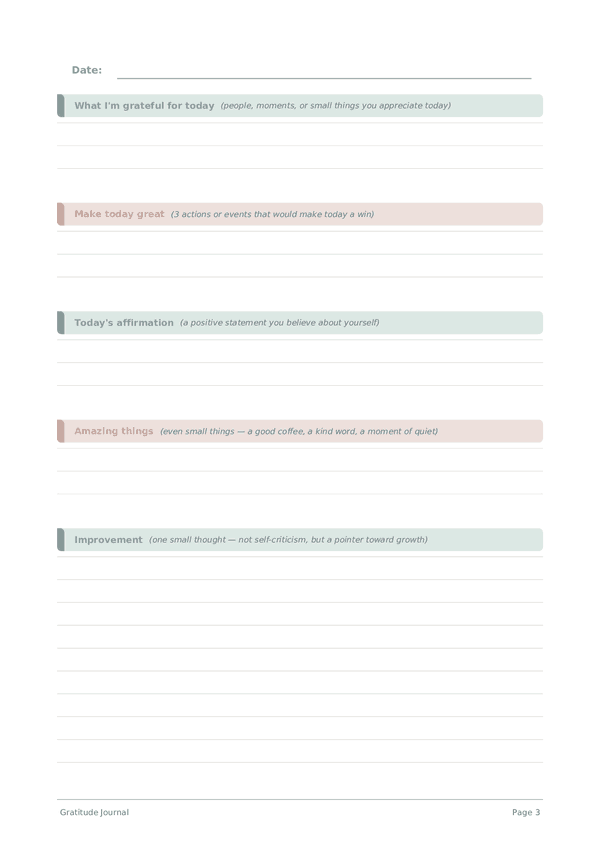
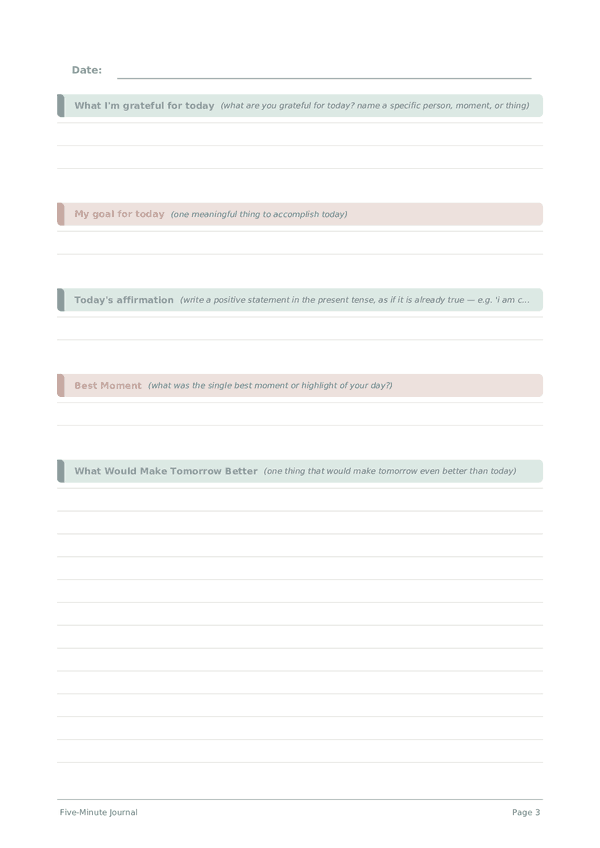
What I'm grateful for today
List 1–3 things you're grateful for today. They can be big or tiny — a good meal, a kind word, sunshine. Gratitude journaling is one of the most scientifically supported well-being practices.
Tomorrow's intention
What one intention or focus will guide you tomorrow?
Tips for success
When and how often to write
Write every evening, taking 5-10 minutes to capture positive moments from your day. Morning entries work too, focused on intentions and what you appreciate right now. The critical habit is consistency — positive thinking patterns take roughly 21 days of daily practice to start feeling automatic. If you miss a day, simply resume without guilt. Weekly, re-read your entries and notice how your perspective is shifting. The journal trains your reticular activating system to filter for good.