Printable Self-Compassion Journal
Daily self-compassion practice and inner kindness journal
Cultivate genuine self-compassion through Kristin Neff three-pillar practice: mindfulness, common humanity, and self-kindness. Treat yourself with the same warmth and understanding you would offer a dear friend.
Customize fields
Toggle fields on or off. Click the pencil to rename, or add your own fields.
What is this journal?
A self-compassion journal is a daily practice built on Dr. Kristin Neff's three pillars of self-compassion: mindfulness, common humanity, and self-kindness. Each entry guides you through recognizing suffering without over-identifying with it, remembering that struggle is universally human, and treating yourself with the same warmth you would offer a friend.
This journal is for anyone who tends to be their own harshest critic — perfectionists, overachievers, people-pleasers, and anyone who finds it easier to be compassionate to others than to themselves. It is particularly powerful during periods of failure, loss, or transition.
Research shows that self-compassion is a stronger predictor of mental health than self-esteem. While self-esteem depends on achievement and comparison, self-compassion provides a stable foundation of self-worth regardless of outcomes. Regular self-compassion practice has been shown to reduce cortisol, increase emotional resilience, and decrease symptoms of anxiety and depression.
Filled example
Here's what a typical entry looks like when filled in:
How to fill in each field
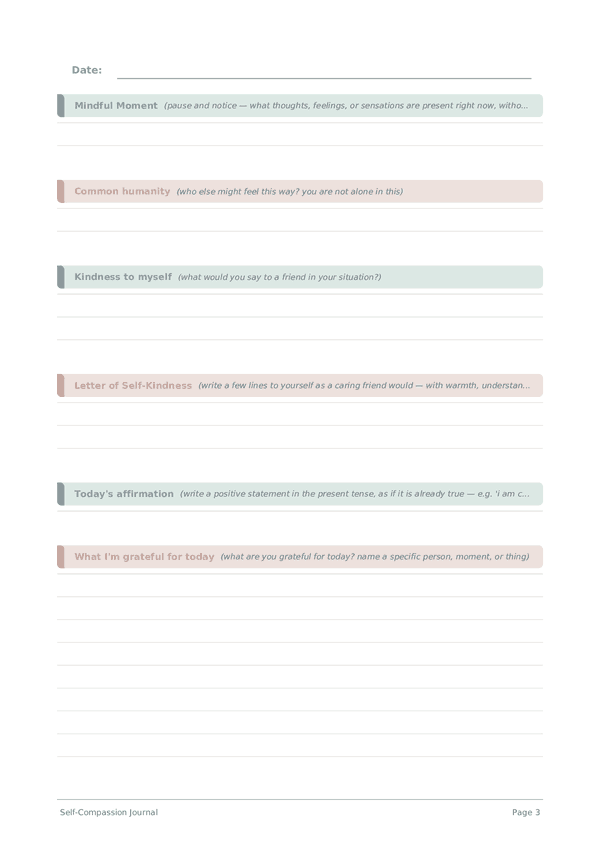
Each day you'll find several labeled sections with lines for writing. Here's what each section is for:
Mindful Moment
Pause and notice — what thoughts, feelings, or sensations are present right now, without judgment?
Common humanity
Who else might feel this way? You are not alone in this
Kindness to myself
Write something kind to yourself, as you would to a dear friend going through the same experience. Self-compassion is a skill that grows with practice.
Letter of Self-Kindness
Write a few lines to yourself as a caring friend would — with warmth, understanding, and encouragement
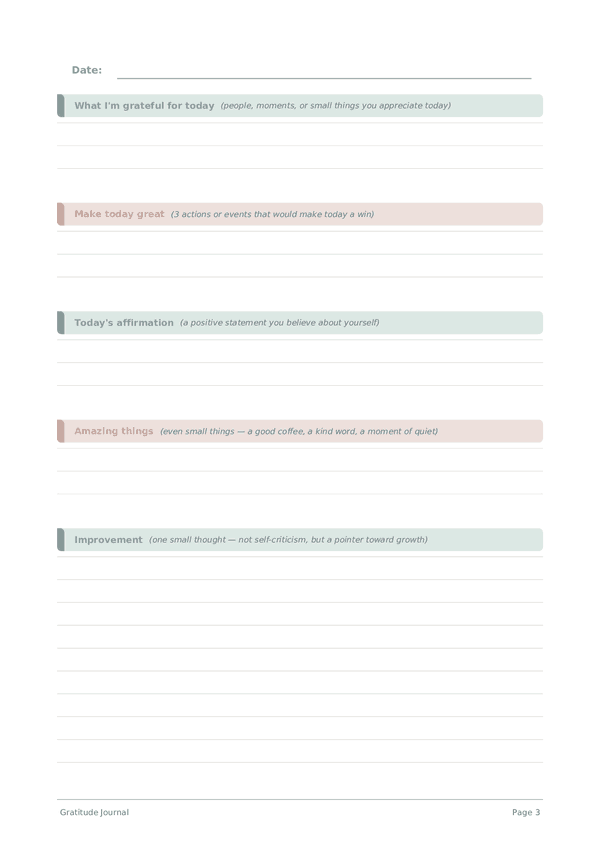
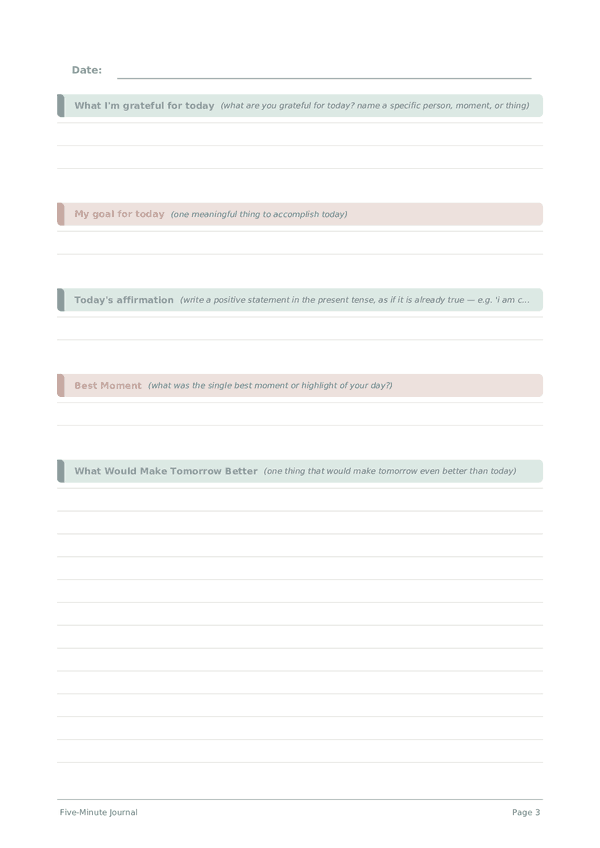
Today's affirmation
Write a positive statement about yourself in the present tense, as if it's already true. For example: 'I am capable and resilient.' Repeating affirmations rewires your thinking patterns over time.
What I'm grateful for today
List 1–3 things you're grateful for today. They can be big or tiny — a good meal, a kind word, sunshine. Gratitude journaling is one of the most scientifically supported well-being practices.
Tips for success
When and how often to write
Write daily, ideally in the evening when you can reflect on moments of self-criticism from the day. Each entry takes 10 minutes. Focus on one moment of difficulty and walk through the three pillars: mindfulness (acknowledging pain without exaggerating), common humanity (recognizing others share this), and self-kindness (treating yourself gently). After three weeks of daily practice, self-compassion begins to feel less forced and more natural. Review weekly to notice which self-critical patterns are losing their grip.