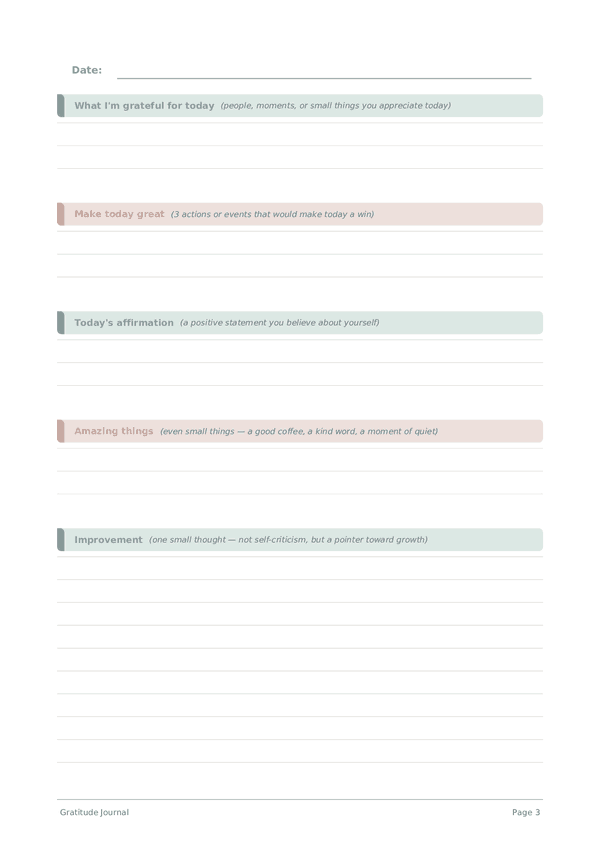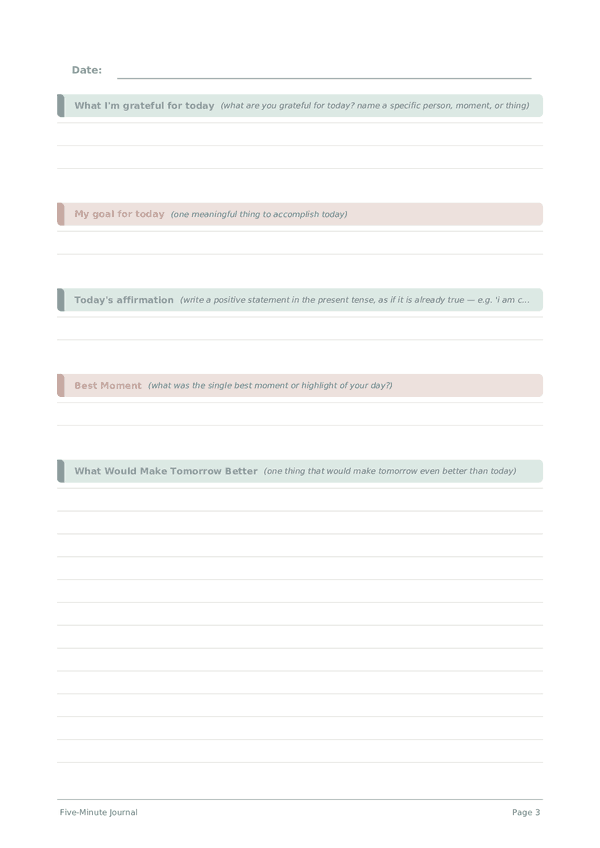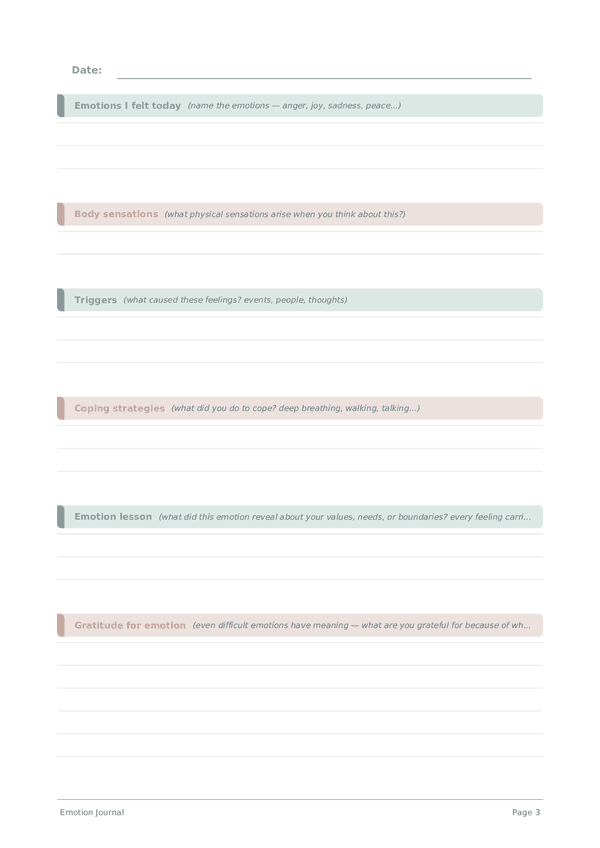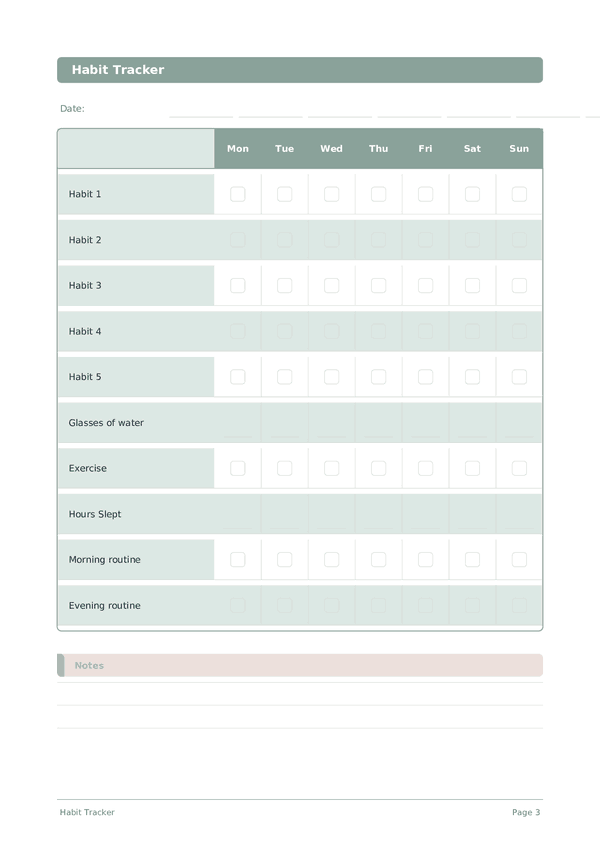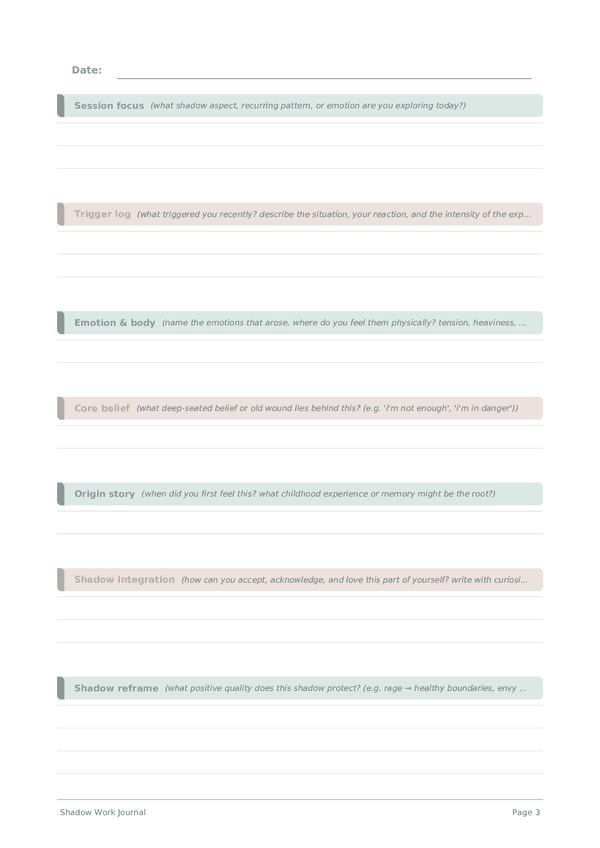
Shadow Work Journal — page preview

Printable Shadow Work Journal

A guided journey into your shadow self for healing, integration, and wholeness

Daily Entry Personal Development & Psychology

A structured journal for shadow work — the psychological practice of exploring the hidden, repressed, and rejected parts of yourself. Each session guides you through identifying a trigger, tracing its emotional and physical signature, uncovering the core belief beneath it, finding its origin, and integrating it with compassion. Based on Jungian psychology and inner child work.


Print-ready A4 / Letter 100% Free 11 downloads

days
Customize fields

Toggle fields on or off. Click the pencil to rename, or add your own fields.

Download Free PDF

Benefits

Identify and understand your emotional triggers without judgement
Trace patterns back to their root — childhood wounds and core beliefs
Transform self-sabotage into self-awareness and healing
Integrate your shadow instead of suppressing or projecting it
Develop emotional resilience and deeper self-compassion
Discover the hidden strengths masked by your shadow

How to Use

Choose a recent trigger, reaction, or recurring pattern to explore
Describe the trigger honestly — what happened, what you felt, how intensely
Locate the emotions in your body — physical sensations are data
Identify the core belief: what story did your mind create about yourself?
Trace the belief to its origin — usually a childhood experience
Write an integration message: speak to this part of yourself with compassion
Find the positive reframe: every shadow protects a hidden gift

What is this journal?

A shadow work journal is a deep psychological practice for exploring the hidden, rejected, and unconscious parts of yourself. Drawing from Carl Jung's concept of the shadow, each entry guides you through identifying triggers, tracing them to core beliefs, exploring their origins, and integrating these disowned aspects into a more whole and authentic self.

This journal is for anyone engaged in serious self-exploration — people in therapy, spiritual seekers, and anyone who has noticed recurring patterns of self-sabotage, projection, or emotional reactivity that they cannot explain through surface-level analysis.

Jungian psychology holds that what we repress does not disappear — it drives our behavior from the unconscious. Shadow work makes the unconscious conscious, which Jung called "the essential task of the second half of life." Research on emotional integration shows that acknowledging and exploring difficult emotions reduces their power, while suppression amplifies them. This journal provides a structured, safe container for that courageous inner work.

Filled example

Here's what a typical entry looks like when filled in:

Tuesday, March 4
Session focus
Exploring why I react so strongly when people do not acknowledge my contributions at work. The intensity of my anger feels disproportionate to the situation.
Trigger log
In today's meeting, my manager presented an idea that I had proposed in an email two weeks ago — with no attribution. I felt a flash of rage that I masked with a smile. My hands were shaking under the table. I spent the next hour fantasizing about confrontations that I knew I would never have.
Emotion & body
Rage — hot, concentrated in my chest and throat. Under the rage: hurt. Under the hurt: a deep fear of being invisible, of not mattering. Physically: clenched jaw, tight shoulders, shallow breathing, knot in stomach. I noticed I was holding my breath.
Core belief
"If people do not see me, I do not exist." Or more precisely: "My worth depends on being recognized by others. Without external acknowledgment, I have no evidence that I matter."
Origin story
Age 10. My older brother was the academic star. I once got the highest grade in my class on a science project, and when I showed my parents, they said 'That's nice' and went back to discussing my brother's college applications. I stopped showing them things after that. The message I absorbed: your achievements are invisible unless someone important validates them.
Shadow integration
The shadow here is the part of me that desperately needs to be seen — the part I have tried to suppress by performing competence and independence. I tell myself I do not need validation, but the rage in that meeting proves otherwise. The wound is not that my manager took credit; it is that the 10-year-old inside me interpreted it as proof of invisibility.
Shadow reframe
What if my need to be seen is not weakness but a legitimate human need that I have been shaming myself for? What if the path forward is not to need less but to give that recognition to myself first — to validate my own contributions before needing others to do it? The 10-year-old did not need his parents to praise him less — he needed them to praise him at all. I can be that parent for myself now.

How to fill in each field

Each day you'll find several labeled sections with lines for writing. Here's what each section is for:

Session focus

What shadow aspect, recurring pattern, or emotion are you exploring today?

Trigger log

What triggered you recently? Describe the situation, your reaction, and the intensity of the experience

Emotion & body

Name the emotions that arose. Where do you feel them physically? Tension, heaviness, warmth, tightness...

Core belief

What deep-seated belief or old wound lies behind this? (e.g. 'I'm not enough', 'I'm in danger')

Origin story

When did you first feel this? What childhood experience or memory might be the root?

Shadow integration

How can you accept, acknowledge, and love this part of yourself? Write with curiosity and compassion

Shadow reframe

What positive quality does this shadow protect? (e.g. rage → healthy boundaries, envy → desire for love)

Tips for success

Write about the traits in others that trigger your strongest reactions — irritation, admiration, or envy. Jungian shadow theory shows that these reactions often mirror disowned parts of yourself
Approach your shadow without judgment. The goal is integration, not elimination. Every shadow trait once served a purpose — understanding that purpose is the key to healing
Explore your childhood "don\u2019t be" messages: don\u2019t be loud, don\u2019t be selfish, don\u2019t be angry. These rules created your shadow by pushing natural traits underground where they fester rather than serve you
Write about recurring dreams and strong emotional reactions — they are the shadow\u2019s language. What keeps appearing in your unconscious mind is what most needs your conscious attention
Balance shadow exploration with self-compassion. After each deep entry, write one thing you accept about yourself. Shadow work without self-compassion becomes self-punishment

When and how often to write

Write one entry per day in the evening, when the day\u2019s interactions have given you material to examine. Shadow work journaling is intense, so keep sessions to 15-20 minutes to avoid emotional overwhelm. If an entry brings up strong emotions, write them out fully, then close the journal and do something grounding before bed. Weekly, re-read your entries with fresh eyes and notice patterns. Take breaks when needed — shadow work is a marathon, not a sprint, and sustainable consistency matters more than daily perfection.