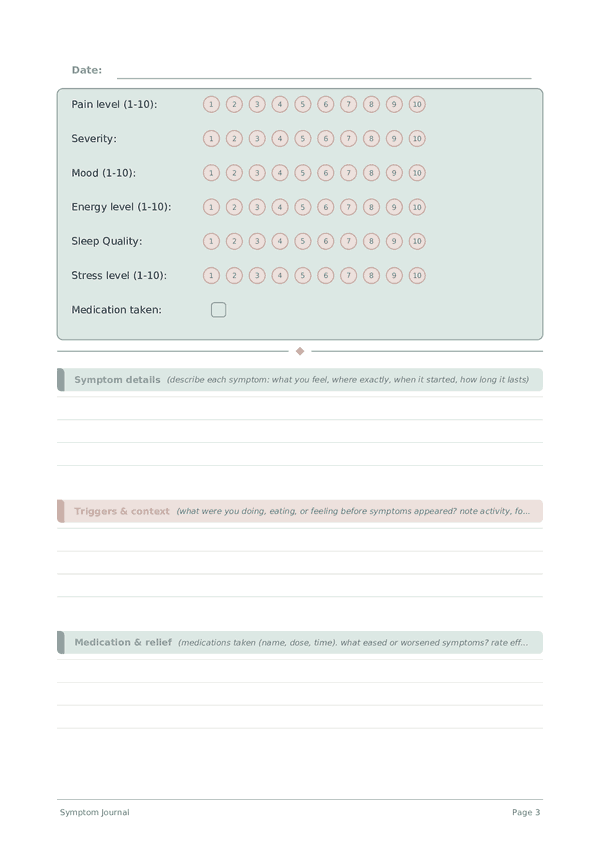
Printable Symptom Journal
Track symptoms, triggers, and treatments daily
A structured daily journal that combines quick health ratings with detailed symptom notes. Rate your pain, mood, energy, and sleep at a glance, then describe symptoms, identify triggers, and log medications in dedicated writing sections. Designed to help you spot patterns and give your doctor a clear, organized health history.
Customize fields
Toggle fields on or off. Click the pencil to rename, or add your own fields.
Benefits
How to Use
What is this journal?
A symptom journal is a focused daily record where you document specific symptoms you are experiencing — their severity, timing, and the circumstances surrounding them. Unlike a general health journal, it zeroes in on tracking particular symptoms over time so you and your healthcare providers can identify patterns, triggers, and the effectiveness of treatments.
This journal is designed for anyone dealing with ongoing or recurring symptoms that are difficult to explain, diagnose, or manage. Whether you are navigating a new health concern, living with a chronic illness, tracking side effects of a medication, or monitoring symptoms while waiting for a diagnosis, this journal gives your observations structure and consistency.
Consistently recording your symptoms transforms vague impressions into concrete data. Instead of telling your doctor "I have been feeling worse lately," you can show them exactly when symptoms intensified, what you were doing at the time, and which interventions helped. This level of detail can accelerate diagnosis, improve treatment plans, and give you a greater sense of control over your health journey.
Filled example
Here's what a typical entry looks like when filled in:
How to fill in each field
The top of each page has quick-fill fields (ratings, checkboxes, numbers). Below that is a lined section for writing. Here's what each field means:
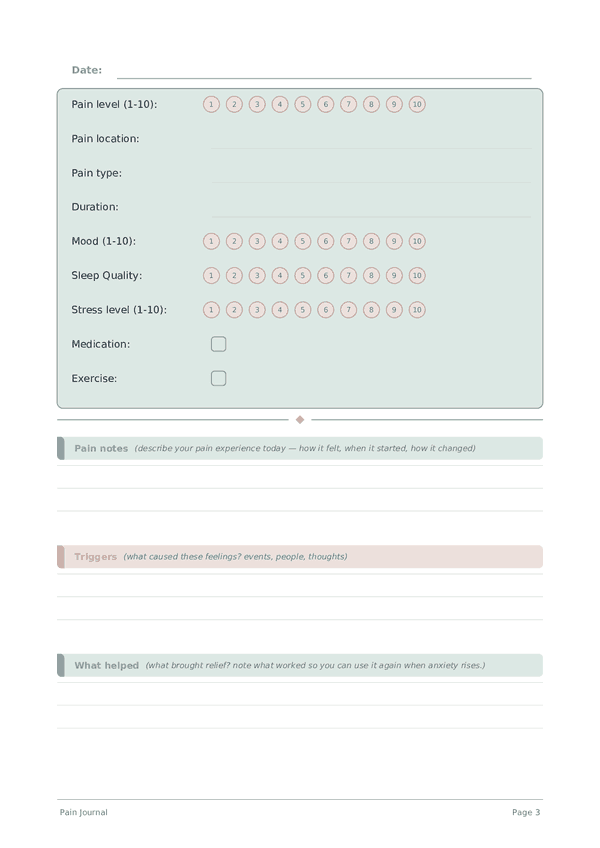
Pain level (1-10)
Rate your pain intensity on a scale. Tracking pain levels helps identify triggers, evaluate treatments, and communicate with healthcare providers.
Severity
How severe are your symptoms today? Rate from 1 (mild) to 10 (debilitating)
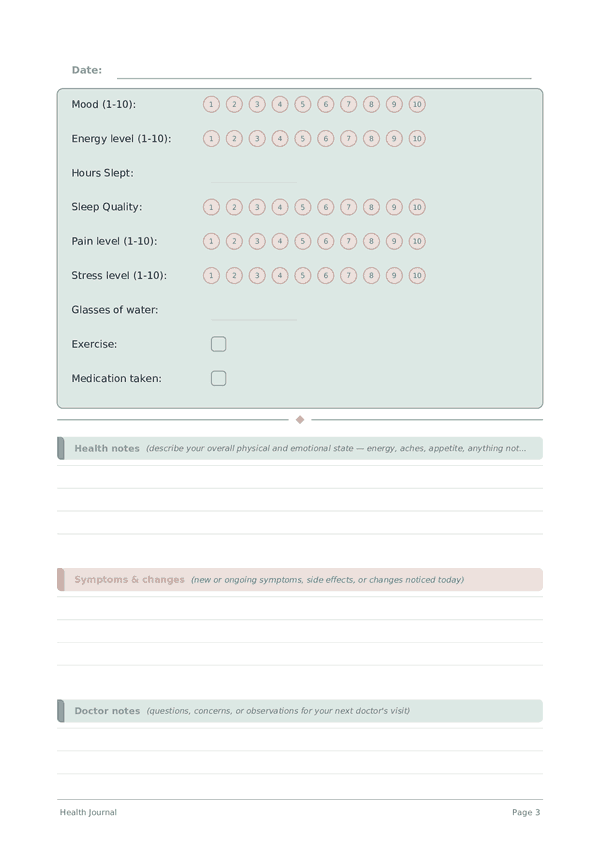
Mood (1-10)
Rate your overall emotional state for the day. 1 means very low or depressed, 10 means exceptionally happy and positive. Don't overthink — go with your gut feeling.
Energy level (1-10)
Rate your physical and mental energy level. 1 means exhausted and drained, 10 means fully energized and alert. This helps you identify what activities boost or drain your energy.
Sleep Quality
Rate how restful your sleep was. 1 means terrible and restless, 5 means deep and refreshing. Quality matters as much as quantity.
Stress level (1-10)
Rate your stress on a scale of 1–10. Over time, you'll identify your stress patterns and which coping strategies work best.
Medication taken
Did you take your medication today? Note what, when, and any doses missed
Symptom details
Describe each symptom: what you feel, where exactly, when it started, how long it lasts
Triggers & context
What were you doing, eating, or feeling before symptoms appeared? Note activity, food, weather, stress
Medication & relief
Medications taken (name, dose, time). What eased or worsened symptoms? Rate effectiveness
Doctor notes
Questions, concerns, or observations for your next doctor's visit
Tips for success
When and how often to write
Log symptoms as they occur throughout the day — even a quick note with time, symptom, and intensity is valuable. Do a full entry each evening, reviewing the day and adding context about activities, diet, and stress. Before medical appointments, compile your entries into a one-page summary of symptom frequency, severity, and patterns. This journal should run continuously during diagnostic periods and active treatment. Once a condition stabilizes, weekly check-ins may be sufficient to monitor for changes.