Printable Therapy Journal
Maximize the benefits of your therapy sessions
Capture key takeaways from therapy sessions, track homework assignments, and reflect on progress between appointments. A valuable bridge between sessions.
Customize fields
Toggle fields on or off. Click the pencil to rename, or add your own fields.
Benefits
How to Use
What is this journal?
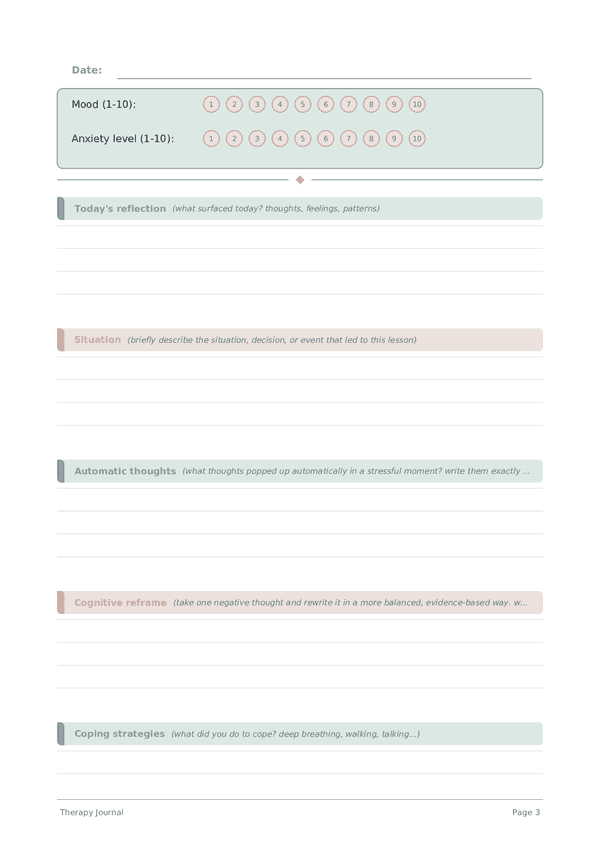
A therapy journal is a guided writing practice designed to complement your therapeutic work. By tracking your mood and anxiety alongside structured reflections on situations, automatic thoughts, and cognitive reframes, you practice the core skills of cognitive behavioral therapy between sessions.
This journal is ideal for anyone currently in therapy or practicing self-guided CBT techniques. It provides a framework for examining the connection between situations, thoughts, and emotional responses — the foundation of most evidence-based therapeutic approaches.
Clinical research consistently shows that clients who journal between therapy sessions make faster progress and retain therapeutic gains longer. Writing down automatic thoughts and practicing reframes strengthens neural pathways for healthier thinking patterns, turning therapeutic insights into lasting cognitive habits.
Filled example
Here's what a typical entry looks like when filled in:
How to fill in each field
The top of each page has quick-fill fields (ratings, checkboxes, numbers). Below that is a lined section for writing. Here's what each field means:
Mood (1-10)
Rate your overall emotional state for the day. 1 means very low or depressed, 10 means exceptionally happy and positive. Don't overthink — go with your gut feeling.
Anxiety level (1-10)
Rate your anxiety level today. Putting a number on it makes the feeling more manageable and trackable.
Today's reflection
Look back at your day honestly. What went well? What could be better? This isn't about judgment — it's about learning and growing.
Situation
Describe the situation or event objectively, as if you're a neutral observer. Separating facts from feelings helps you see things more clearly.
Automatic thoughts
What thoughts popped up automatically in a stressful moment? Write them exactly as they came — even if they seem irrational
Cognitive reframe
Take one negative thought and rewrite it in a more balanced, evidence-based way. What would a wise friend say?
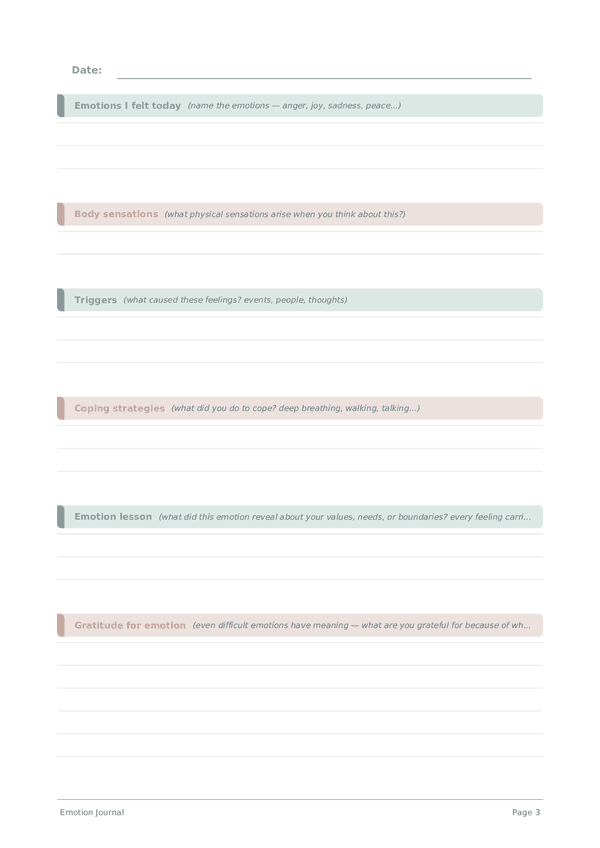
Coping strategies
What did you do to cope? Deep breathing, walking, talking...
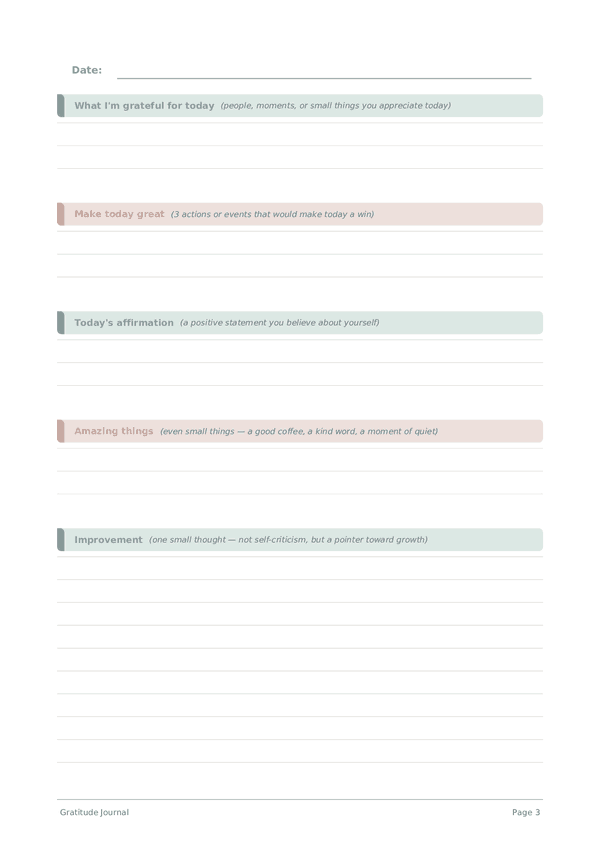
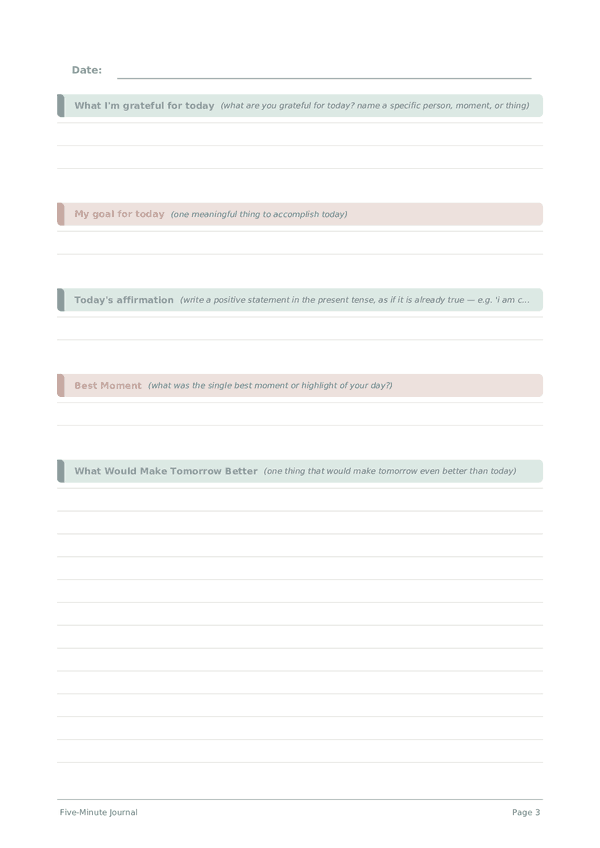
What I'm grateful for today
List 1–3 things you're grateful for today. They can be big or tiny — a good meal, a kind word, sunshine. Gratitude journaling is one of the most scientifically supported well-being practices.
Tips for success
When and how often to write
Write after every therapy session while insights are fresh — ideally within 1 hour. Between sessions, use the journal when you notice automatic thoughts or cognitive distortions in daily life. Before your next session, spend 5 minutes reviewing your entries to identify what you want to explore further. This between-session work is what transforms weekly therapy into continuous growth.