Printable Wine Journal
Document wine tasting experiences
Record wines you taste with region, grape variety, rating, and tasting notes. Build a personal wine reference to remember favorites and discover preferences.
Customize fields
Toggle fields on or off. Click the pencil to rename, or add your own fields.
Benefits
How to Use
What is this journal?
A wine journal is a tasting log for recording your explorations of wine with structure and detail. By tracking the wine's origin, grape, pairing, and your sensory observations of sight, aroma, and taste, you develop your palate and build a personal reference that guides future selections.
This journal is for wine enthusiasts at any level — from curious beginners learning to distinguish grape varieties to experienced tasters refining their vocabulary. It removes the intimidation from wine appreciation by providing a simple framework for describing what you see, smell, and taste.
Wine education research shows that the single most effective way to develop your palate is systematic tasting with written notes. The act of translating sensory experience into words forces you to pay closer attention and creates reference points that make each subsequent tasting more informed. Over time, your journal becomes a personalized wine guide that no app or critic can replicate.
Filled example
Here's what a typical entry looks like when filled in:
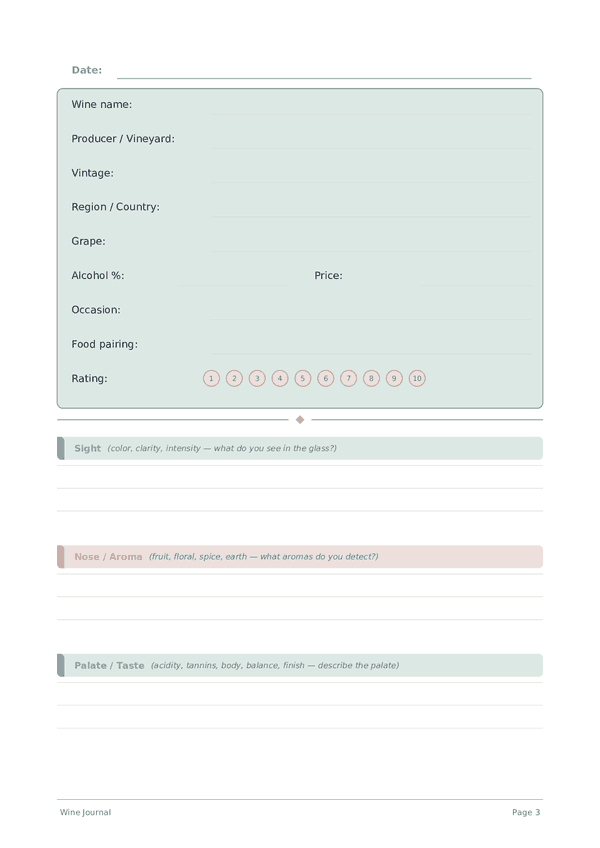
How to fill in each field
The top of each page has quick-fill fields (ratings, checkboxes, numbers). Below that is a lined section for writing. Here's what each field means:
Wine name
Full name of the wine as it appears on the label
Producer / Vineyard
Winery or producer name — who made this wine?
Vintage
Year the grapes were harvested — e.g. 2019, 2021
Region / Country
Where is it from? e.g. Bordeaux, France or Napa, USA
Grape
Grape variety or blend — Cabernet Sauvignon, Merlot, Chardonnay...
Alcohol %
Alcohol percentage as shown on the label — e.g. 13.5%
Price
How much did you pay? Bottle price in your local currency
Occasion
Work, casual, date night, party, gym, travel, special event...
Food pairing
What did you eat with it, or what would pair well? Cheese, steak, pasta...
Rating
Your overall score for this wine: 1 = unpleasant, 10 = exceptional
Sight
Color, clarity, intensity — what do you see in the glass?
Nose / Aroma
Fruit, floral, spice, earth — what aromas do you detect?
Palate / Taste
Acidity, tannins, body, balance, finish — describe the palate
Overall impressions
Would you buy again? Overall thoughts on this wine
Tips for success
When and how often to write
Write an entry for every new wine you taste — capture your notes during or immediately after tasting, while sensory details are sharp. If you attend a tasting event, bring the journal and write brief notes for each pour, then expand your favorite entries later that evening. Aim for at least 2-3 entries per week if you are actively building your palate. Monthly, re-read your entries to track how your preferences and vocabulary have evolved.