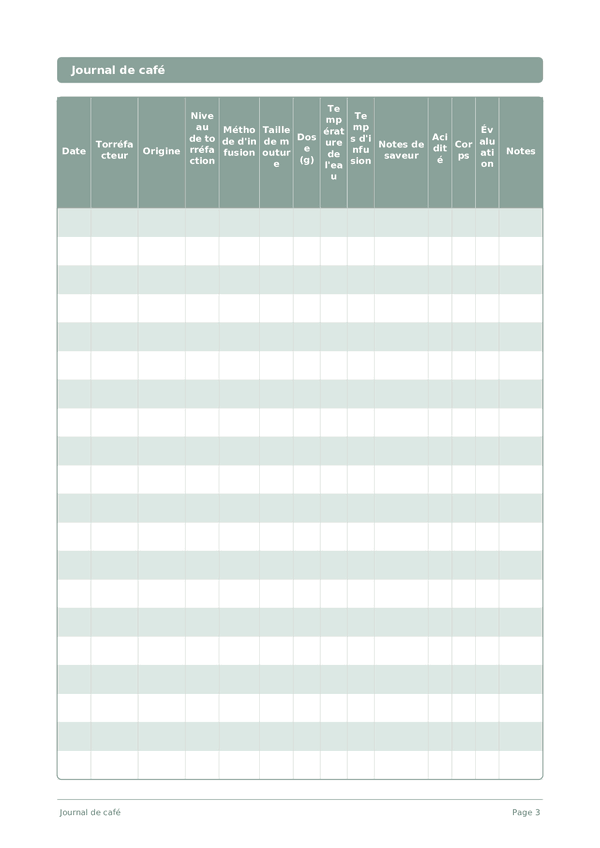
Printable Journal de café
Suivez vos infusions, ajustez les paramètres et développez votre palais
Log every cup with precision: origin, roast level, brew method, grind size, dose, water temperature, brew time, and tasting notes. Build a personal database of brews to refine your technique and discover what makes the perfect cup.
Personnaliser les champs
Activez ou désactivez les champs. Cliquez sur le crayon pour renommer, ou ajoutez vos propres champs.
Avantages
Comment utiliser
Qu'est-ce que ce journal ?
A coffee journal is a structured tasting and brewing log for documenting your coffee explorations. By recording roaster, origin, brew parameters, and detailed flavor notes, you develop your palate and optimize your brewing technique — turning your morning cup from a routine into a craft.
This journal is for coffee lovers who want to go deeper — from home brewers dialing in their pour-over technique to enthusiasts exploring single-origin beans from different regions. Whether you brew with an espresso machine, AeroPress, French press, or pour-over, tracking your variables is the path to consistently excellent coffee.
Specialty coffee professionals emphasize that the difference between good and exceptional coffee often comes down to small adjustments in grind size, water temperature, and brew time. Without records, you cannot replicate your best cups or diagnose your worst. This journal transforms coffee brewing from guesswork into deliberate practice.
Exemple rempli
Voici à quoi ressemble une entrée typique une fois remplie :
| Date | Torréfacteur | Origine | Niveau de torréfaction | Méthode d'infusion | Taille de mouture | Dose (g) | Température de l'eau | Temps d'infusion | Notes de saveur | Acidité | Corps | Évaluation | Notes |
|---|---|---|---|---|---|---|---|---|---|---|---|---|---|
| 2025-03-04 | Onyx Coffee Lab | Ethiopia Yirgacheffe, Gedeb station | Light | V60 pour-over | Medium-fine (18 on Comandante) | 18g | 96C | 3:15 | Bright blueberry, jasmine, honey sweetness, clean citrus finish | High, sparkling | Light-medium, tea-like | 9 | Best cup from this bag yet. The slightly coarser grind compared to yesterday reduced astringency. Bloom for 45 seconds was key. |
| 2025-03-04 | Onyx Coffee Lab | Ethiopia Yirgacheffe, Gedeb station | Light | AeroPress | Medium (20 on Comandante) | 15g | 92C | 2:00 | Muted blueberry, more chocolate, heavier body, less floral | Medium, rounded | Medium, syrupy | 7 | Same beans, different method. AeroPress brings out body but loses the delicate florals. Prefer V60 for this origin. |
Comment remplir chaque champ
Chaque page est un tableau avec des colonnes. Remplissez une ligne par entrée. Voici à quoi sert chaque colonne :
Date
Inscrivez la date du jour. Cela ancre votre entrée dans le temps et aide lors de la relecture ultérieure.
Torréfacteur
Origine
Niveau de torréfaction
Méthode d'infusion
Taille de mouture
Dose (g)
Température de l'eau
Temps d'infusion
Notes de saveur
Acidité
Corps
Évaluation
Note globale de l'expérience
Notes
Ajoutez tout contexte ou réflexion supplémentaire. Cette colonne fourre-tout est pour tout ce qui ne rentre pas ailleurs mais pourrait être utile plus tard.
Conseils pour réussir
Quand et à quelle fréquence écrire
Log every brew that you want to learn from — aim for at least one entry per day if you brew at home. The table format makes this fast: 30 seconds to fill in the parameters, another 30 for flavor notes. When dialing in a new bean, log every attempt until you hit the target flavor profile. Review your logs weekly to identify which variables had the most impact. Over months, your data builds a personal brewing reference that no blog or YouTube video can match.
Questions fréquentes
Comment régler un espresso avec les colonnes dose, mouture, température et temps ?
La Specialty Coffee Association (SCA, Brewing Standards) définit un taux d'extraction de 18-22 % et un TDS de 1,15-1,35 % comme cible Gold Cup pour le filtre ; les paramètres d'espresso varient selon la recette. Garde la dose constante (par ex. 18 g), puis ajuste la mouture — plus fine pour accélérer l'extraction, plus grossière pour la ralentir. Note chaque changement d'une seule variable à la fois sur des lignes consécutives. Après 10 à 15 entrées, les liens entre mouture, temps et saveur deviennent lisibles — méthode formalisée par la formation Q Grader (Coffee Quality Institute).
Comment noter correctement les arômes — faut-il utiliser la Flavor Wheel du Coffee Taster ?
Oui. La SCA Coffee Taster's Flavor Wheel (2016, révisée avec le World Coffee Research Sensory Lexicon) fournit un vocabulaire commun allant des catégories larges (fruité, noisetté, floral) aux descripteurs précis (mûre, amande, jasmin). Commence large dans les premières entrées, puis affine à mesure que ton palais se développe. Les protocoles de cupping Q Grader exigent des descripteurs de ce lexique. Associe les arômes aux champs acidité et corps — ensemble ils forment les dimensions sensorielles essentielles de la fiche de cupping SCA.
Comment évaluer l'acidité, le corps et le score global de façon cohérente ?
La fiche de cupping SCA note chaque attribut sur une échelle de 6 à 10 : 6 = bien, 7 = très bien, 8 = excellent, 9-10 = exceptionnel. Pour l'acidité, distingue la qualité (vive vs piquante) de l'intensité. Le corps désigne la sensation en bouche, pas l'intensité de la saveur. Garde ton score global à un point de la moyenne des attributs — les valeurs aberrantes indiquent généralement un biais d'auréole. La formation Q Grader insiste sur la calibration à travers des échantillons de référence répétés.
Pourquoi noter séparément l'origine et le niveau de torréfaction — ne sont-ils pas liés ?
L'origine et la torréfaction interagissent mais sont des variables indépendantes. L'Arabica Variety Atlas de World Coffee Research documente que la même variété d'Éthiopie ou de Colombie exprime des profils de saveur distincts, tandis que le niveau de torréfaction dicte quelle part de ce caractère d'origine survit. Les torréfactions légères préservent l'acidité d'origine ; les torréfactions foncées déplacent les saveurs vers des notes de torréfaction. Suivre les deux te permet de distinguer « j'aime l'Éthiopie » de « j'aime les torréfactions légères » — une distinction que la plupart des amateurs confondent.
Quelle température d'eau faut-il noter, et est-ce vraiment important ?
Les SCA Brewing Standards spécifient 93-96 °C (200-205 °F) pour une extraction optimale du café filtre. En dessous, la sous-extraction donne un café acide et faible ; au-dessus, on risque l'amertume. Des recherches dans Food Research International confirment que la température pilote la cinétique d'extraction aux côtés de la mouture et du temps de contact. Si tu prépares en dessous de 90 °C, attends-toi à pousser vers une mouture plus fine ou un temps plus long. Note la température réelle, pas le réglage de la bouilloire si elles diffèrent.
En quoi ce journal papier diffère-t-il des applications comme Filtru ou Beanconqueror ?
Les applications automatisent les minuteries et le stockage des recettes mais détournent l'attention de la tasse. Le papier exige une observation délibérée, compétence fondamentale que la formation sensorielle Q Grader (CQI) considère comme primordiale — la technologie ne peut pas remplacer une dégustation calibrée. Dix lignes par page encouragent aussi la comparaison horizontale d'extractions consécutives, plus difficile sur un petit écran. Utilise l'application pour la précision du chronomètre si tu veux, mais consigne ici les données sensorielles pour une réflexion ciblée.
Combien d'entrées avant de pouvoir identifier mes préférences réelles ?
Les formateurs de World Coffee Research et de la SCA suggèrent globalement 30 à 50 cuppings délibérés avant que des schémas émergent — origines préférées, niveaux de torréfaction, méthodes d'extraction. Maintiens une variable constante par semaine (par ex. mêmes grains, mouture variable) pour isoler les effets. Revois la colonne des scores chaque mois : tes 8+ se concentrent-ils sur les naturels d'Éthiopie, les lavés de Colombie ou des torréfacteurs spécifiques ? Le format tableau rend ce balayage longitudinal possible — ton propre palais devient la base de données.
Quelles erreurs courantes de réglage faut-il éviter dans les notes ?
Premièrement, changer plusieurs variables entre deux extractions — tu perds l'isolation. Deuxièmement, noter sans sentir d'abord ; l'arôme pilote 70-80 % de la perception du goût (science olfactive de base, revues Food Chemistry). Troisièmement, ignorer la teneur minérale de l'eau, dont le SCA Water Quality Handbook (2009) montre qu'elle affecte significativement l'extraction. Quatrièmement, les notes aromatiques vagues — « noisetté » est moins utile qu'« amande, chocolat au lait ». Cinquièmement, noter avant que la tasse refroidisse ; beaucoup de saveurs n'apparaissent qu'en dessous de 60 °C.
Vous aimerez aussi
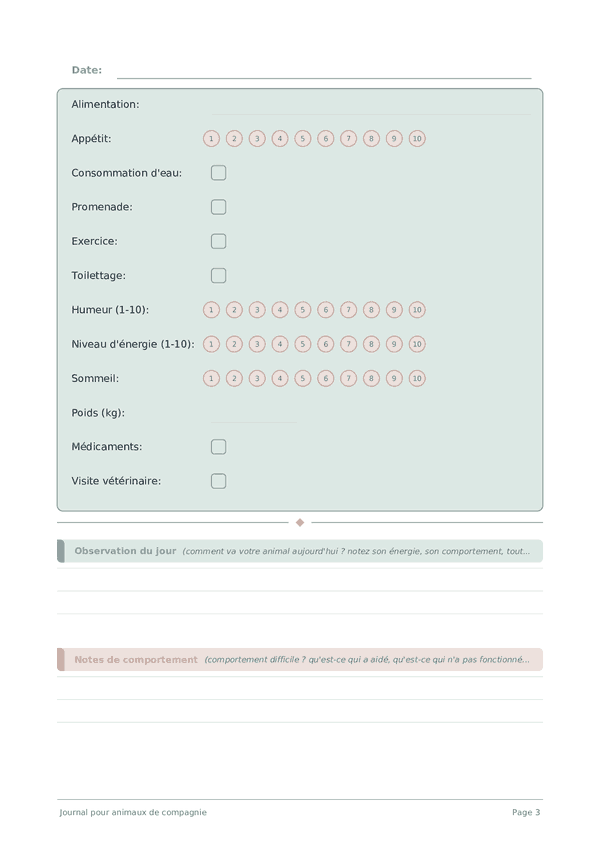
Journal pour animaux de compagnie
Carnet de soins quotidien pour votre compagnon à quatre pattes
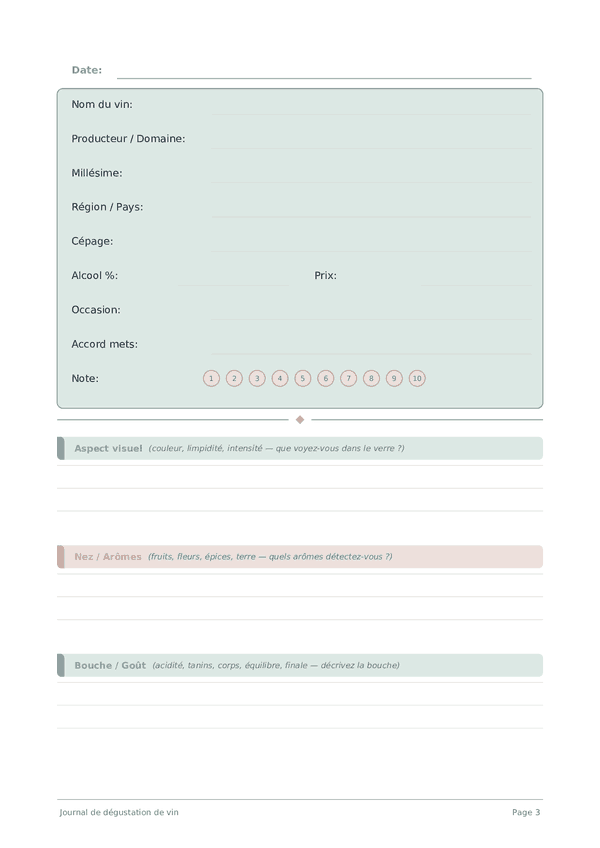
Journal de dégustation de vin
Documentez vos expériences de dégustation de vin
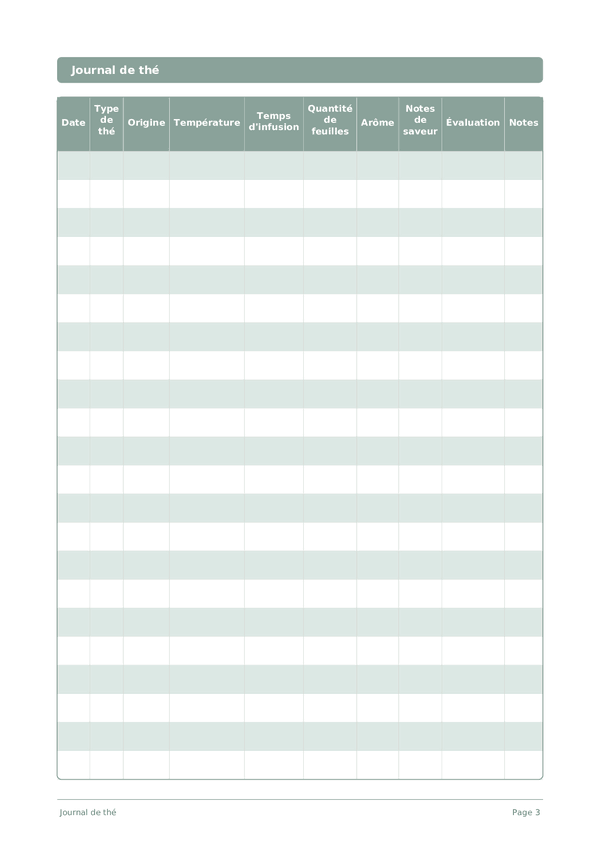
Journal de thé
Suivez chaque tasse — de la feuille à la dernière gorgée
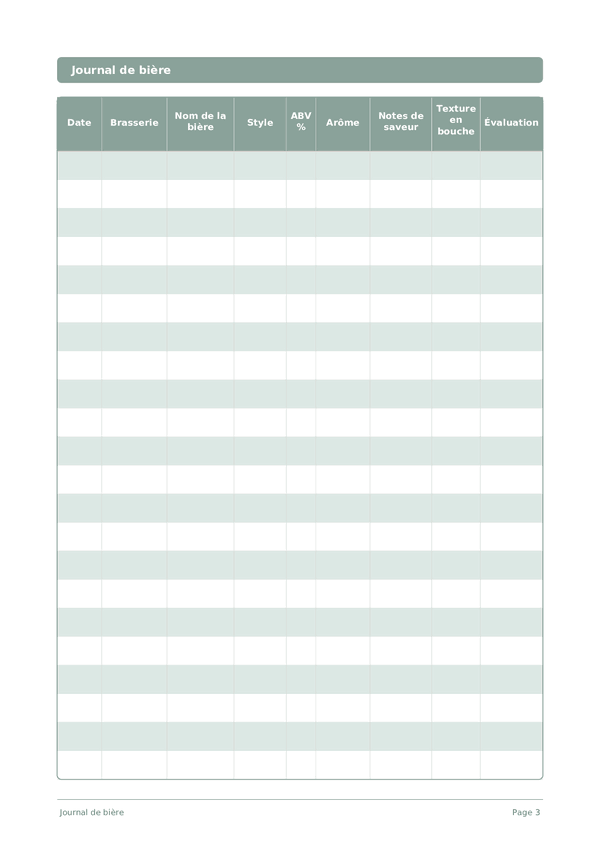
Journal de bière
Suivez et notez chaque bière artisanale que vous goûtez
Molette pour zoomer, glisser pour déplacer