Printable Journal de dégustation de vin
Documentez vos expériences de dégustation de vin
Record wines you taste with region, grape variety, rating, and tasting notes. Build a personal wine reference to remember favorites and discover preferences.
Personnaliser les champs
Activez ou désactivez les champs. Cliquez sur le crayon pour renommer, ou ajoutez vos propres champs.
Avantages
Comment utiliser
Qu'est-ce que ce journal ?
A wine journal is a tasting log for recording your explorations of wine with structure and detail. By tracking the wine's origin, grape, pairing, and your sensory observations of sight, aroma, and taste, you develop your palate and build a personal reference that guides future selections.
This journal is for wine enthusiasts at any level — from curious beginners learning to distinguish grape varieties to experienced tasters refining their vocabulary. It removes the intimidation from wine appreciation by providing a simple framework for describing what you see, smell, and taste.
Wine education research shows that the single most effective way to develop your palate is systematic tasting with written notes. The act of translating sensory experience into words forces you to pay closer attention and creates reference points that make each subsequent tasting more informed. Over time, your journal becomes a personalized wine guide that no app or critic can replicate.
Exemple rempli
Voici à quoi ressemble une entrée typique une fois remplie :
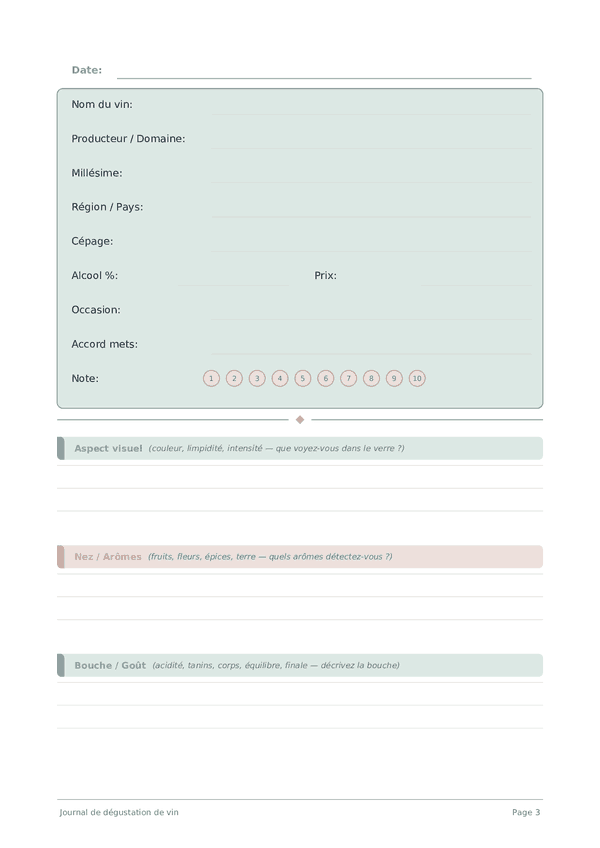
Comment remplir chaque champ
Le haut de chaque page comporte des champs à remplissage rapide (évaluations, cases à cocher, chiffres). En dessous se trouve une section lignée pour écrire. Voici ce que signifie chaque champ :
Nom du vin
Nom complet du vin tel qu'il apparaît sur l'étiquette
Producteur / Domaine
Nom du domaine ou du producteur — qui a élaboré ce vin ?
Millésime
Année de récolte des raisins — ex. 2019, 2021
Région / Pays
D'où vient-il ? ex. Bordeaux, France ou Napa, États-Unis
Cépage
Cépage ou assemblage — Cabernet Sauvignon, Merlot, Chardonnay...
Alcool %
Pourcentage d'alcool indiqué sur l'étiquette — ex. 13,5 %
Prix
Combien avez-vous payé ? Prix de la bouteille dans votre devise locale
Occasion
Travail, décontracté, soirée en amoureux, fête, sport, voyage, événement spécial...
Accord mets
Qu'avez-vous mangé avec, ou quel accord serait idéal ? Fromage, steak, pâtes...
Note
Votre note globale pour ce vin : 1 = désagréable, 10 = exceptionnel
Aspect visuel
Couleur, limpidité, intensité — que voyez-vous dans le verre ?
Nez / Arômes
Fruits, fleurs, épices, terre — quels arômes détectez-vous ?
Bouche / Goût
Acidité, tanins, corps, équilibre, finale — décrivez la bouche
Impressions générales
Le rachèteriez-vous ? Vos impressions générales sur ce vin
Conseils pour réussir
Quand et à quelle fréquence écrire
Write an entry for every new wine you taste — capture your notes during or immediately after tasting, while sensory details are sharp. If you attend a tasting event, bring the journal and write brief notes for each pour, then expand your favorite entries later that evening. Aim for at least 2-3 entries per week if you are actively building your palate. Monthly, re-read your entries to track how your preferences and vocabulary have evolved.
Questions fréquentes
Comment structurer une note de dégustation en utilisant les sections robe, arôme, goût et notes ?
Suis l'Approche Systématique de Dégustation du WSET (SAT, Niveau 3, édition actuelle) : commence par la robe — intensité et teinte ; puis l'arôme — notes primaires de fruit, secondaires de vinification, tertiaires de vieillissement ; puis le goût — douceur, acidité, tanins, alcool, corps, intensité de la saveur, longueur en bouche ; conclus dans les notes. Le Court of Master Sommeliers (Deductive Tasting Method) suit la même séquence. Les quatre prompts du journal correspondent directement aux piliers du SAT.
Que noter dans les champs région et cépage au-delà de l'évident ?
Enregistre l'appellation (par ex. Barolo DOCG, Sancerre AOC) plutôt que le seul pays, car l'OIV (Organisation Internationale de la Vigne et du Vin, 2023) recense plus de 1 400 indications géographiques. Pour le cépage, note s'il s'agit d'un vin monocépage ou d'un assemblage avec les pourcentages approximatifs. Les supports de cours WSET Niveau 2 soulignent que la paire région-cépage prédit le style de façon plus fiable que le seul producteur, t'aidant à cartographier tes préférences au fil des dégustations.
Comment utiliser le score de vin 1-10 de façon cohérente sur de nombreuses bouteilles ?
Wine Spectator et Decanter publient sur des échelles de 100 points, mais pour un usage personnel, le Court of Master Sommeliers recommande un cadre simple et reproductible. Ancre ta propre échelle : 6 = correct mais sans mémoire, 7-8 = agréable, 9 = excellent dans son style, 10 = véritablement exceptionnel. Note par rapport au style du vin — un grand Beaujolais et un grand Barolo peuvent tous deux mériter 9. Réévalue occasionnellement pour recalibrer à mesure que ton palais évolue.
Quelles notes d'accord mets-vins méritent d'être consignées — et pourquoi ?
Note le plat, les ingrédients clés et si l'accord a magnifié, harmonisé ou clashé. Le WSET enseigne que l'acidité s'accorde avec le gras, les tanins avec les protéines, la douceur avec la douceur ; documenter les résultats construit une bibliothèque personnelle d'accords plus vite que la lecture de règles. Des recherches en œnologie de l'UC Davis sur les phénoliques confirment que l'interaction tanins-protéines est mesurable, pas subjective. Note aussi le champ occasion — les vins de circonstance bénéficient d'indices mémoriels contextuels pour une future référence.
En quoi ce journal diffère-t-il des applications comme Vivino ou CellarTracker ?
Les applications s'appuient sur des scores participatifs qui peuvent biaiser ta perception avant que tu goûtes. Écrire ses propres notes en premier — comme l'exige la méthodologie WSET SAT — développe une calibration indépendante du palais. Les chroniqueurs de Decanter et Vinous conseillent systématiquement de déguster à l'aveugle ou sans être influencé par les scores. Le format physique du journal encourage aussi une observation plus lente et délibérée. Tu peux toujours croiser les applications ensuite, mais l'enregistrement principal reste ta propre impression non altérée.
Faut-il noter le degré d'alcool et le prix — quelle est la valeur analytique ?
Oui. L'OIV (2023) rapporte une hausse de l'alcool moyen dans les principales régions due au changement climatique, donc suivre le degré révèle la dérive de style au fil des millésimes. Le rapport qualité-prix est ta métrique la plus actionnable : repère les vins où ton score dépasse les attentes par le prix comme « rachats ». Le WSET Niveau 3 demande spécifiquement aux candidats d'évaluer le rapport qualité-prix, reconnaissant qu'il s'agit d'une compétence apprise, pas d'une opinion.
Combien de vins faut-il journaliser avant que les schémas de préférence émergent ?
La plupart des formateurs WSET et Court of Master Sommeliers suggèrent 50 à 100 dégustations délibérées avant que des schémas de préférence clairs se cristallisent. Tague les entrées par région, cépage et note, puis revois chaque mois : notes-tu régulièrement le Riesling de Moselle au-dessus du Sauvignon Blanc néo-zélandais ? Ta tolérance aux tanins augmente-t-elle ? Les champs structurés du journal rendent cette analyse rétrospective possible, alors que la seule mémoire déforme de façon fiable les impressions passées après environ trois mois.
Erreurs courantes à éviter dans les notes de dégustation ?
Premièrement, les descripteurs vagues — « agréable » ou « lisse » n'ont aucune valeur analytique ; utilise le Lexique des familles aromatiques du WSET (agrumes, fruits à noyau, tropical, etc.). Deuxièmement, le biais d'auréole — laisser le prix ou la réputation du producteur influencer la note avant la dégustation. Troisièmement, sauter l'évaluation visuelle, qui renseigne sur l'âge et le cépage. Quatrièmement, comparer des styles différents avec un score absolu unique. Enfin, noter à la hâte — les protocoles du Court of Master Sommeliers prévoient au minimum trois minutes par vin.
Vous aimerez aussi
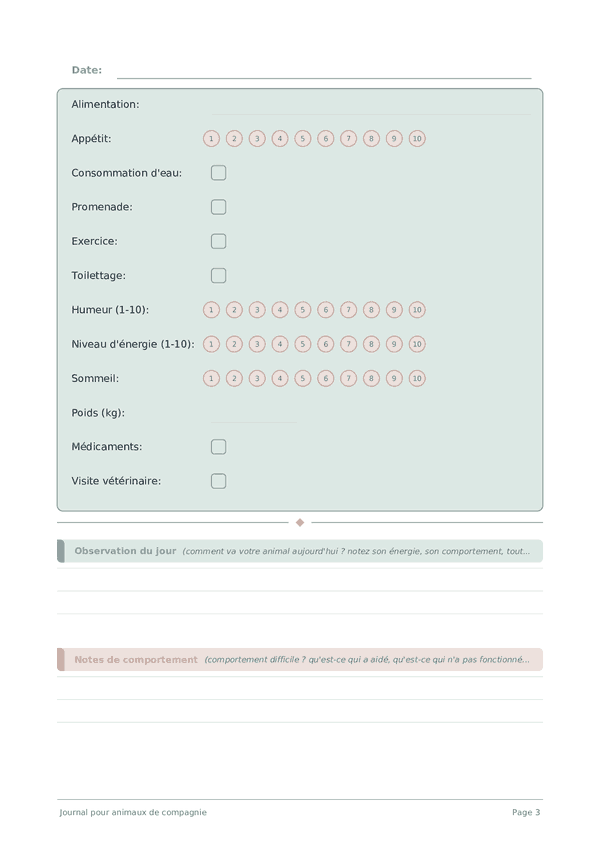
Journal pour animaux de compagnie
Carnet de soins quotidien pour votre compagnon à quatre pattes
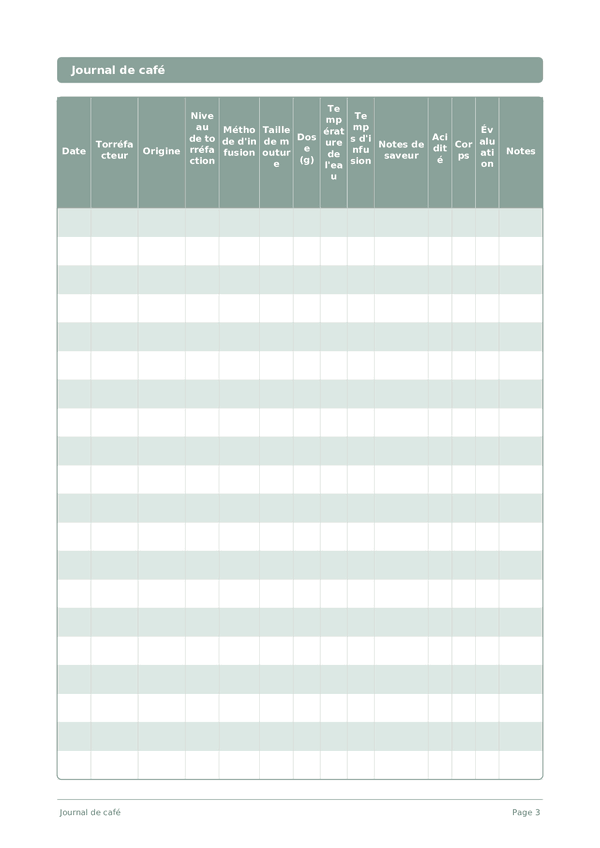
Journal de café
Suivez vos infusions, ajustez les paramètres et développez votre palais
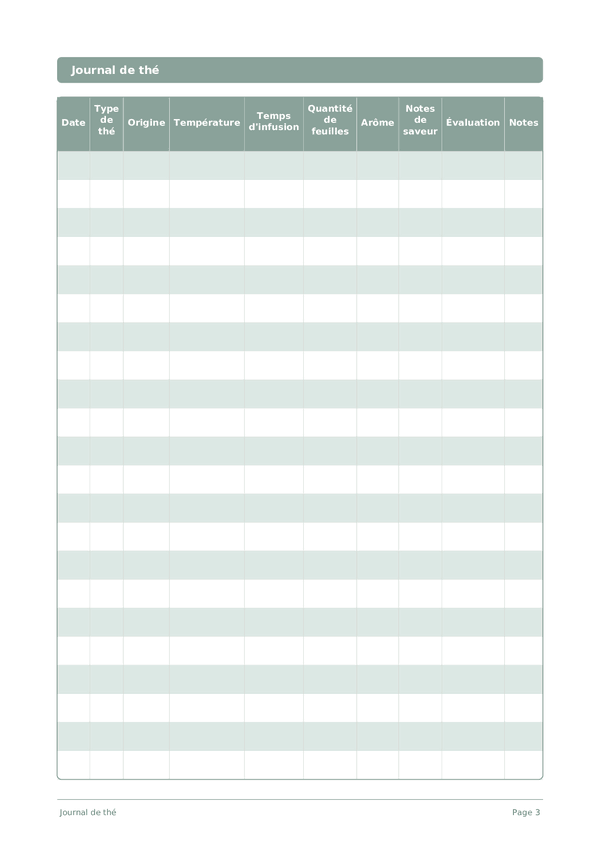
Journal de thé
Suivez chaque tasse — de la feuille à la dernière gorgée
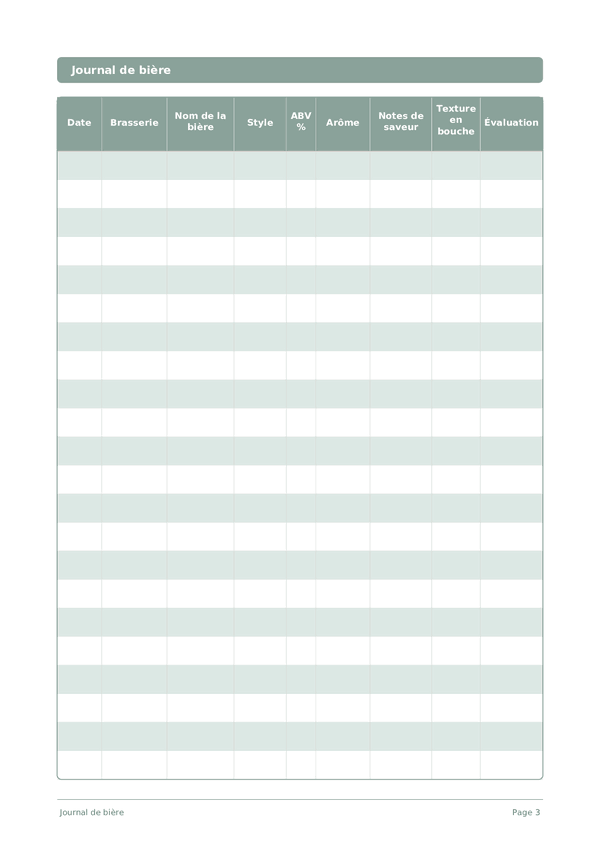
Journal de bière
Suivez et notez chaque bière artisanale que vous goûtez
Molette pour zoomer, glisser pour déplacer