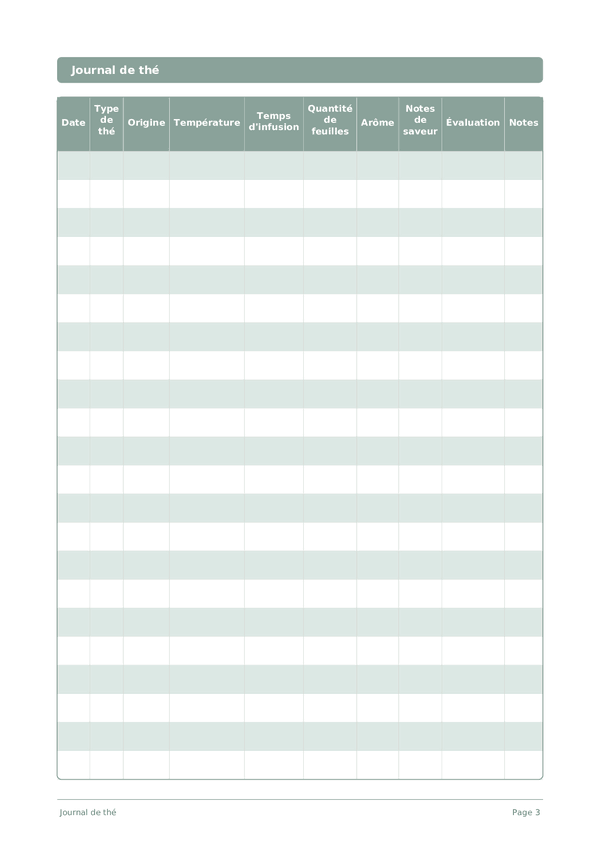
Printable Journal de thé
Suivez chaque tasse — de la feuille à la dernière gorgée
A structured log for tea enthusiasts who want to deepen their tasting practice. Record brewing parameters, aroma, flavor notes, and ratings to build a personal reference of your favorite teas. Whether you explore single-origin loose-leaf or seasonal herbals, this journal helps you brew better with every session.
Personnaliser les champs
Activez ou désactivez les champs. Cliquez sur le crayon pour renommer, ou ajoutez vos propres champs.
Avantages
Comment utiliser
Qu'est-ce que ce journal ?
A tea journal is a tasting and steeping log for documenting your exploration of tea. By recording tea type, origin, steeping parameters, and detailed sensory notes, you deepen your appreciation of one of the world's most nuanced beverages and learn to brew each tea at its best.
This journal is for tea enthusiasts who want to move beyond tea bags into the rich world of loose-leaf tea — from delicate white teas and complex oolongs to robust pu-erhs and fragrant jasmine greens. It is equally valuable whether you practice gongfu cha or Western-style brewing.
Tea masters emphasize that the same leaf can produce dramatically different cups depending on water temperature, steeping time, and leaf-to-water ratio. This journal helps you find the optimal parameters for each tea and track how teas evolve across multiple infusions — a journey that transforms tea drinking from a casual habit into a mindful practice with centuries of wisdom behind it.
Exemple rempli
Voici à quoi ressemble une entrée typique une fois remplie :
| Date | Type de thé | Origine | Température | Temps d'infusion | Quantité de feuilles | Arôme | Notes de saveur | Évaluation | Notes |
|---|---|---|---|---|---|---|---|---|---|
| 2025-03-04 | Oolong — Tieguanyin | Anxi, Fujian, China | 90 | 30s / 45s / 60s / 90s | 7g / 100ml gaiwan | Orchid, fresh cream, hint of roasted grain | 1st steep: bright floral, buttery. 2nd: orchid deepens, light honey. 3rd: toasted grain emerges, mineral finish. 4th: gentle, sweet, lingering. | 8 | Excellent Tieguanyin — opened beautifully over 4 steeps. The leaves unfurled into full, intact leaves. Best at 2nd and 3rd steep. Gongfu style brings out complexity. |
| 2025-03-04 | Green — Gyokuro | Uji, Kyoto, Japan | 60 | 90s / 60s / 30s | 5g / 60ml kyusu | Intense umami, seaweed, sweet grass, ocean breeze | 1st steep: rich umami bomb, sweet marine, buttery. 2nd: lighter, more vegetal, asparagus. 3rd: delicate, sweet, refreshing. | 9 | This Gyokuro is exceptional. Low temperature is essential — anything above 65C brings bitterness. The umami is almost broth-like. Paired well with mild white fish for lunch. |
Comment remplir chaque champ
Chaque page est un tableau avec des colonnes. Remplissez une ligne par entrée. Voici à quoi sert chaque colonne :
Date
Inscrivez la date du jour. Cela ancre votre entrée dans le temps et aide lors de la relecture ultérieure.
Type de thé
Origine
Température
Enregistrez votre température basale. Les variations de température aident à suivre l'ovulation et la santé globale du cycle.
Temps d'infusion
Quantité de feuilles
Arôme
Notes de saveur
Évaluation
Note globale de l'expérience
Notes
Ajoutez tout contexte ou réflexion supplémentaire. Cette colonne fourre-tout est pour tout ce qui ne rentre pas ailleurs mais pourrait être utile plus tard.
Conseils pour réussir
Quand et à quelle fréquence écrire
Log each tea session as you brew — the table format is designed for quick capture while the kettle cools. If you drink 2-3 teas daily, log the one you want to remember or improve. When exploring a new tea type (say, transitioning from black to pu-erh), log every session for at least two weeks to build baseline understanding. Monthly, review your entries to see which teas you rated highest and which brewing parameters consistently produce your best cups.
Questions fréquentes
Quelle température d'eau noter pour le thé vert, l'oolong, le thé noir et le pu-erh ?
Le Specialty Tea Institute et les principales références sur les régions productrices convergent sur des plages larges : vert 70-80 °C, blanc 75-85 °C, oolong 85-95 °C, noir et pu-erh 95-100 °C. Des études dans le Journal of Agricultural and Food Chemistry sur l'extraction des catéchines confirment que la température pilote la libération des polyphénols — trop chaud extrait de l'amertume, trop frais donne un thé léger. Note la température réelle, pas simplement le réglage de la bouilloire, car le bec verseur et le gaiwan refroidissent l'eau de 5 à 10 °C en transit.
Combien de temps infuser les différents types de thé, et comment noter plusieurs infusions ?
Les recommandations du Specialty Tea Institute suggèrent : vert 1-3 min, noir 3-5 min, oolong 1-5 min (en allongeant à chaque infusion), pu-erh 30 s à 3 min en style gongfu. Un thé en vrac de qualité supporte 3 à 7 infusions ; note-les en lignes séparées avec temps d'infusion « 30s, 45s, 1m ». Des recherches dans Food Chemistry sur la cinétique d'infusion du thé montrent que les profils d'extraction changent selon les infusions — les premières libèrent des acides aminés, les suivantes des tanins. Des lignes séquentielles rendent cette évolution visible.
Quel vocabulaire aromatique utiliser dans la colonne arôme ?
Emprunte aux travaux sensoriels établis : floral (jasmin, orchidée), herbacé (herbe coupée, épinard), noisetté (châtaigne, amande), terreux (sous-bois, bois humide), fumé, marin, miellé, minéral. Le Specialty Tea Institute enseigne trois évaluations distinctes : l'arôme de la feuille sèche, de la feuille humide après rinçage, et de l'infusion. Des recherches dans Food Chemistry sur les composés volatils du thé (linalol, géraniol, méthyl jasmonate) soutiennent ces catégories chimiquement. Sois précis — « floral » seul perd sa valeur analytique sur des centaines d'entrées.
À quel point la quantité de feuilles doit-elle être précise — et pourquoi est-ce si important ?
Note les grammes par 100 ml d'eau, pas seulement les cuillères, car la densité des feuilles varie considérablement entre les feuilles vertes plates et l'oolong roulé. Les paramètres d'infusion du Specialty Tea Institute centrent généralement sur 2-3 g par 200 ml en style occidental, 5-7 g par 100 ml en gongfu. Le ratio pilote la force d'extraction indépendamment du temps d'infusion — beaucoup de feuilles avec un court temps d'infusion imite le résultat de peu de feuilles avec un long temps. Une petite balance de cuisine vaut vite son pesant d'or ici.
Ce journal convient-il aux infusions d'herbes, au matcha et aux sachets — pas seulement au thé en vrac ?
Oui. Les colonnes fonctionnent pour toute infusion : type de thé capture le matcha, les tisanes, le rooibos ou la camomille ; température, temps d'infusion et quantité de feuilles s'appliquent toujours. Les entrées de matcha notent le style de fouet plutôt que le temps d'infusion. Le thé en sachet se note parfaitement — l'ITF (International Tea Federation) suit les volumes en sachet comme la majorité mondiale de la consommation de thé. La valeur du journal réside dans l'observation répétable, pas dans le snobisme du format.
En quoi noter le thé est-il différent du café ou du vin ?
Le thé est unique en ce qu'il supporte plusieurs infusions à partir d'une même charge de feuilles — une seule « session » peut remplir plusieurs lignes. Contrairement au vin, les paramètres du thé (température, temps, ratio) sont activement variables, davantage comme le café. Contrairement au café, les ratios caféine et L-théanine modifient l'expérience cognitivement — des recherches dans Food Chemistry documentent le profil calming de la L-théanine. Réserve la colonne notes pour le contexte non sensoriel : heure de la journée, humeur, aliment associé.
Combien de sessions avant de trouver mes origines et types de thé préférés ?
Prévois 30 à 50 sessions notées avant que des schémas clairs émergent. Filtre tes entrées par type de thé et colonne de score : tes 8+ se concentrent-ils sur le Dan Cong oolong, le Darjeeling première récolte ou le thé noir du Yunnan ? L'origine compte aussi — les cours du Specialty Tea Institute établissent des parallèles avec le terroir viticole. Après 50 sessions, tu peux aussi identifier quels paramètres d'infusion sous-performent régulièrement, améliorant ainsi ta technique en même temps que tes décisions d'achat.
Erreurs courantes qui nuisent à la qualité des données du journal de thé ?
Premièrement, estimer la quantité de feuilles à l'œil plutôt que de peser — cela tue la variable de ratio. Deuxièmement, ne noter que la première infusion quand plusieurs ont été préparées. Troisièmement, des arômes vagues comme « ça sent bon » — utilise les familles de descripteurs ITF ou Specialty Tea Institute. Quatrièmement, noter immédiatement, alors que beaucoup de thés révèlent leur complexité en refroidissant. Cinquièmement, ignorer la source d'eau — des recherches dans Food Chemistry montrent que la teneur minérale altère significativement l'extraction, comme pour le café.
Vous aimerez aussi
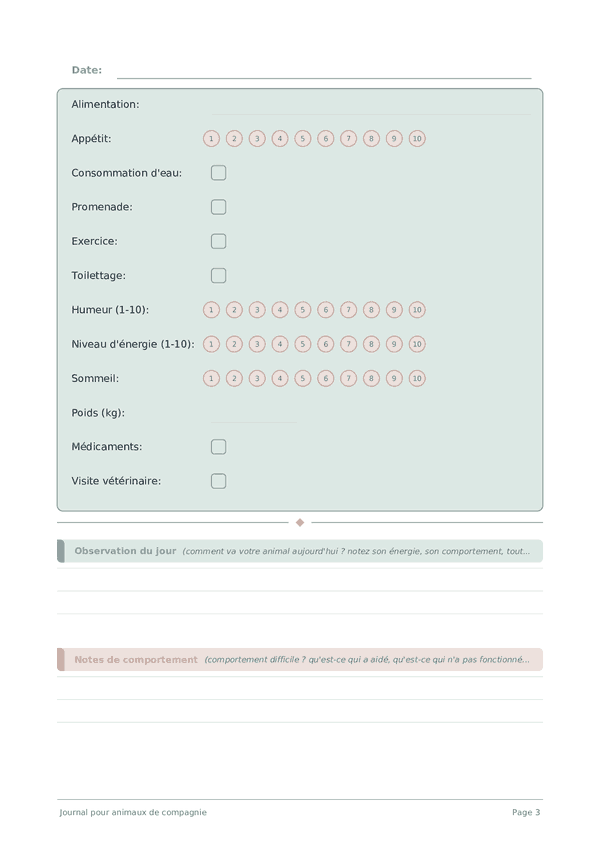
Journal pour animaux de compagnie
Carnet de soins quotidien pour votre compagnon à quatre pattes
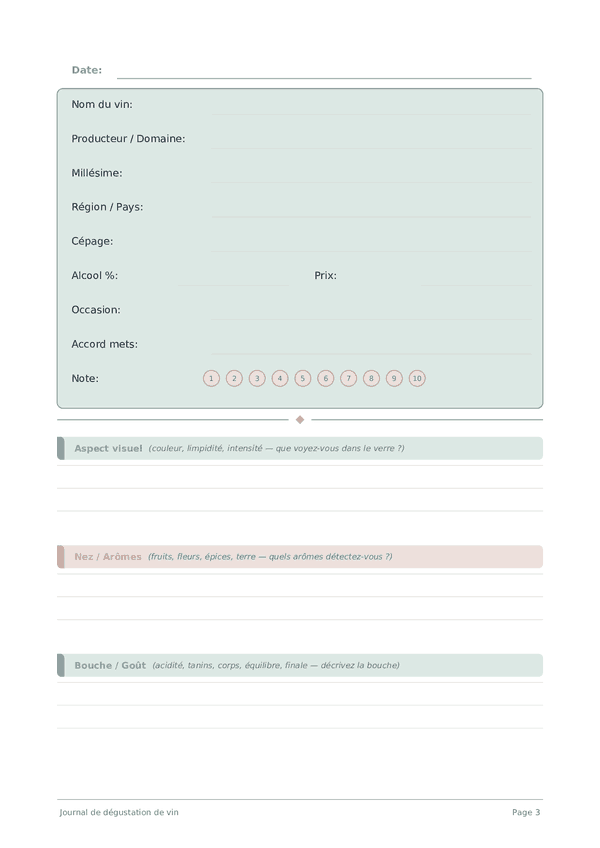
Journal de dégustation de vin
Documentez vos expériences de dégustation de vin
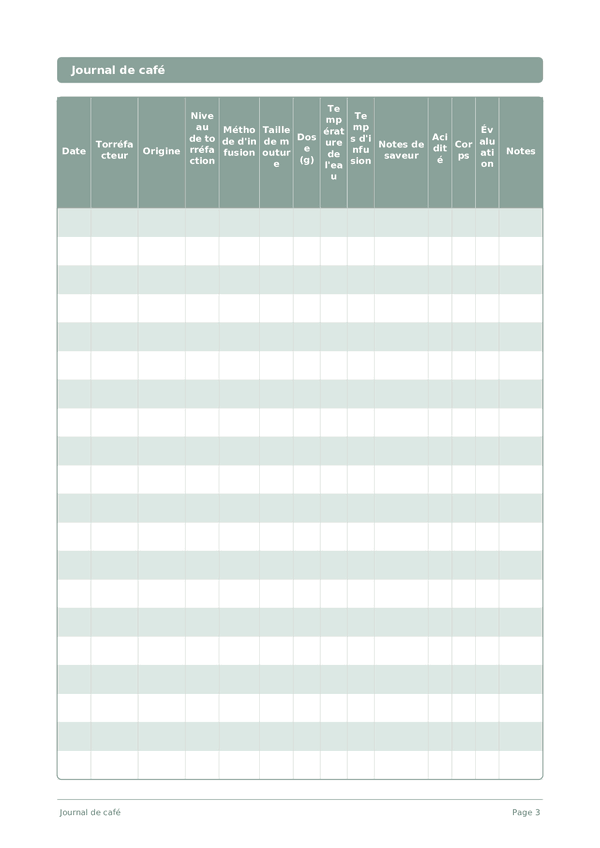
Journal de café
Suivez vos infusions, ajustez les paramètres et développez votre palais
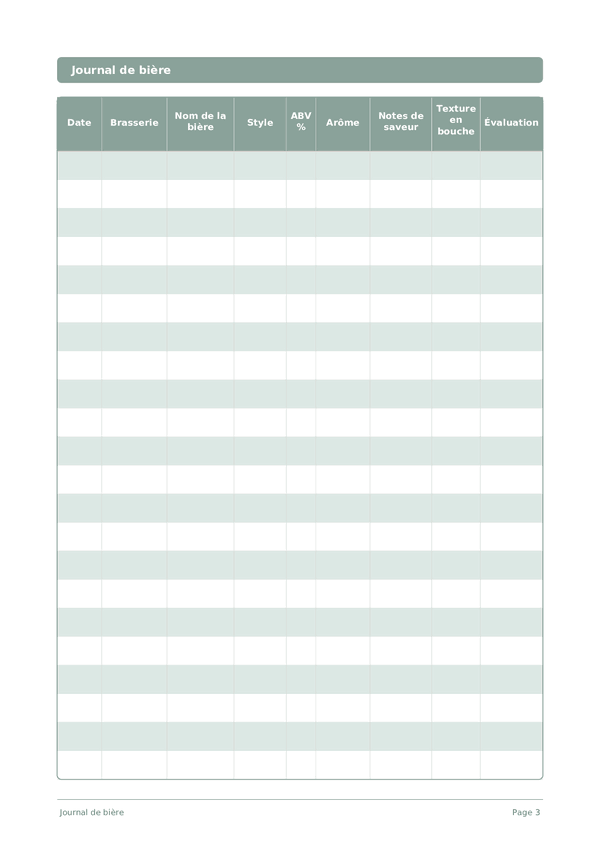
Journal de bière
Suivez et notez chaque bière artisanale que vous goûtez
Molette pour zoomer, glisser pour déplacer