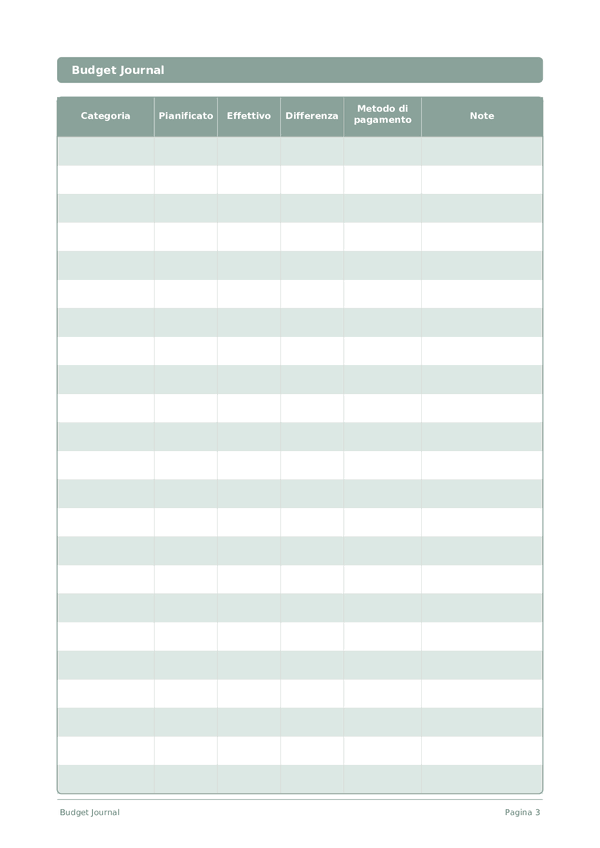
Printable Diario del Budget
Monitora le spese, confronta i piani e raggiungi i tuoi obiettivi di risparmio
Personalizza campi
Attiva o disattiva i campi. Clicca la matita per rinominare, oppure aggiungi i tuoi campi.
Cos'è questo diario?
Questo è un diario a registro tabellare — ogni pagina contiene una tabella strutturata con colonne per registrare i dati. Perfetto per tenere traccia di spese, allenamenti, letture o qualsiasi attività che beneficia di voci organizzate e confrontabili.
Come compilare ogni campo
Ogni pagina è una tabella con colonne. Compila una riga per ogni voce. Ecco a cosa serve ogni colonna:
Categoria
Assegna una categoria a questa voce (es. cibo, trasporti, intrattenimento). Categorie coerenti rendono i tuoi dati facili da analizzare.
Pianificato
Effettivo
Differenza
Metodo di pagamento
Note
Aggiungi qualsiasi contesto o pensiero aggiuntivo. Questa colonna tuttofare è per tutto ciò che non si adatta altrove ma potrebbe essere utile in seguito.
Consigli per il successo
Quando e con quale frequenza scrivere
Aggiungi voci man mano che gli eventi accadono durante il giorno. Per i registri finanziari, annota ogni transazione immediatamente. Per i registri di attività, compila dopo ogni sessione. Fai una revisione settimanale o mensile per analizzare i tuoi dati ed estrarre intuizioni.
Domande frequenti
Come funzionano insieme le colonne pianificato e effettivo?
La colonna pianificato si compila all'inizio del mese; quella effettivo si aggiorna man mano che spendi. Il CFPB (2023, 'Your Money, Your Goals: Tracking Your Income and Expenses') descrive questo ciclo piano-vs-effettivo come la disciplina fondamentale del budgeting. La colonna differenza evidenzia poi le spese eccessive categoria per categoria. Senza registrare prima il pianificato, il diario diventa un semplice registro passivo delle uscite invece di uno strumento di budget.
Quali categorie devo inserire nella colonna delle categorie?
Adatta le categorie alle tue spese reali, non a quelle ideali. Il Bureau of Labor Statistics degli Stati Uniti (2023, Consumer Expenditure Survey) raggruppa le spese domestiche in categorie come abitazione, alimentazione, trasporti, sanità e intrattenimento: buoni punti di partenza. Personalizza a partire dall'ultimo estratto conto bancario. Le diciotto righe per pagina si adattano alle categorie dettagliate della maggior parte delle famiglie; categorie troppo granulari oscurano i pattern che il diario serve a rivelare.
È meglio usare la regola 50/30/20 o il budget a base zero con questo modello?
Entrambi funzionano — scegli in base al tuo temperamento. La regola 50/30/20 viene da Elizabeth Warren & Amelia Warren Tyagi, 'All Your Worth' (Free Press, 2005): 50% bisogni, 30% desideri, 20% risparmi. Il budget a base zero risale a Peter Pyhrr, 'Zero-Base Budgeting' (Harvard Business Review, nov–dic 1970): ogni euro pianificato ha una categoria. Il diario supporta entrambi perché la colonna pianificato accetta qualsiasi metodo di allocazione.
Perché il diario include una colonna per il metodo di pagamento?
Diversi metodi di pagamento si correlano a diversi comportamenti di spesa. Prelec & Simester (2001, Marketing Letters, 12(1), 5–12) hanno rilevato che la disponibilità a pagare aumenta sensibilmente con le carte di credito rispetto al contante. Hirschman (1979, Journal of Consumer Research, 6(1), 58–66) ha documentato effetti simili. Registrare il metodo di pagamento rende visibile quel comportamento; nel corso dei mesi potresti vedere categorie in cui la spesa con carta supera sistematicamente il piano.
Cosa devo inserire nelle intestazioni di pagina reddito e obiettivo risparmio?
Il reddito mensile netto — quello che arriva effettivamente sul tuo conto — e un obiettivo di risparmio specifico per il mese. Il CFPB (2023, 'Setting Savings Goals') sottolinea l'importanza di obiettivi di risparmio specifici e con scadenza rispetto a intenzioni vaghe. Compilare queste intestazioni ancra ogni importo pianificato per categoria: se la somma degli importi pianificati supera il reddito meno l'obiettivo risparmio, i conti non tornano ancora prima che il mese inizi.
In cosa si differenzia da Mint, YNAB o altre app?
Le app automatizzano la registrazione delle transazioni; la carta impone un'inserimento consapevole. Soman (2001, Journal of Consumer Research, 27(4), 460–474) ha dimostrato che la registrazione manuale dei pagamenti riduce le spese successive — l'automazione elimina quel freno. Thaler & Sunstein, 'Nudge' (Yale University Press, 2008) descrivono l'attrito scritto come una caratteristica comportamentale positiva. Usa entrambi se utile — l'app per la completezza, il diario per l'effetto comportamentale.
Scrivere un budget cambia davvero le abitudini di spesa?
Sì — il budgeting mentale e quello scritto modificano entrambi il comportamento. Heath & Soll (1996, Journal of Consumer Research, 23(1), 40–52) hanno documentato che le categorie di budget esplicite alterano la spesa. Il CFPB (2023, 'Your Money, Your Goals: Tracking Your Income and Expenses') raccomanda espressamente il monitoraggio scritto. Compilare prima il pianificato e poi l'effettivo rende visibile il divario riga per riga, il ciclo di feedback di base che il cambiamento comportamentale richiede.
Qual è l'errore di budgeting più comune che questo modello aiuta a evitare?
Impostare gli importi pianificati ma non registrare mai quelli effettivi. Il CFPB (2023, 'Your Money, Your Goals: Tracking Your Income and Expenses') osserva che i piani senza monitoraggio non producono cambiamenti comportamentali. Il formato con diciotto righe, pensato per la revisione mensile, impone entrambe le fasi del ciclo. La colonna differenza rende impossibile nascondere le conseguenze delle spese non registrate quando ti siedi ogni settimana ad aggiornare le righe.
Potrebbe piacerti anche
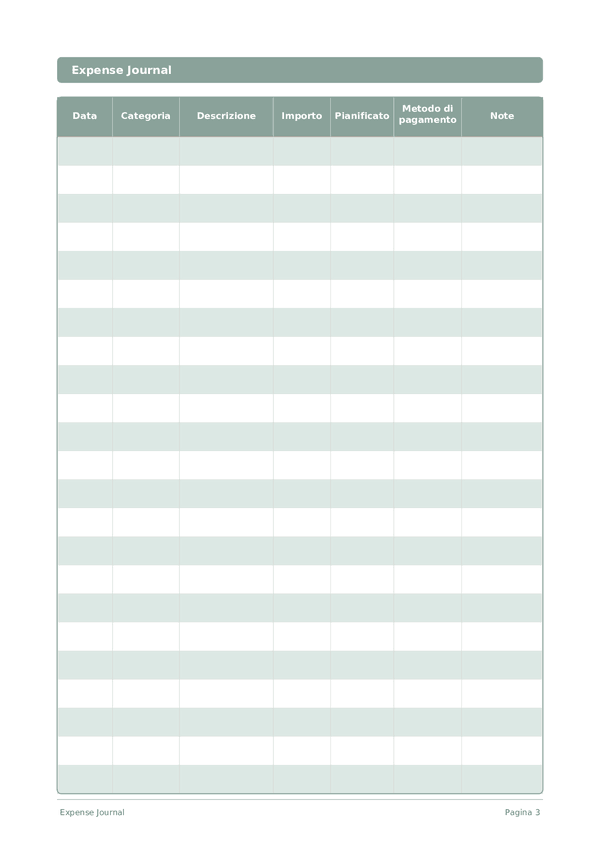
Diario delle Spese
Monitora ogni euro per prendere il controllo delle tue finanze
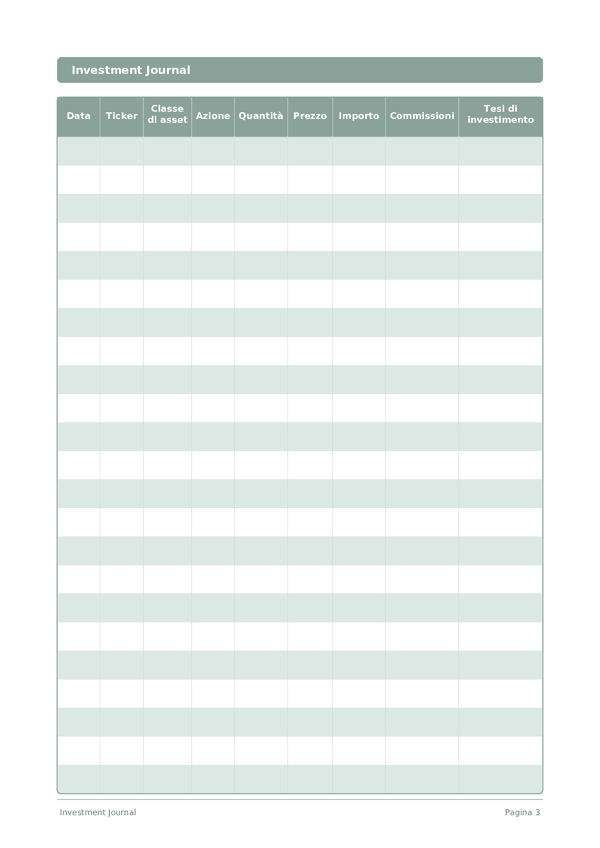
Diario degli Investimenti
Monitora le operazioni, analizza le decisioni e fai crescere il tuo portafoglio
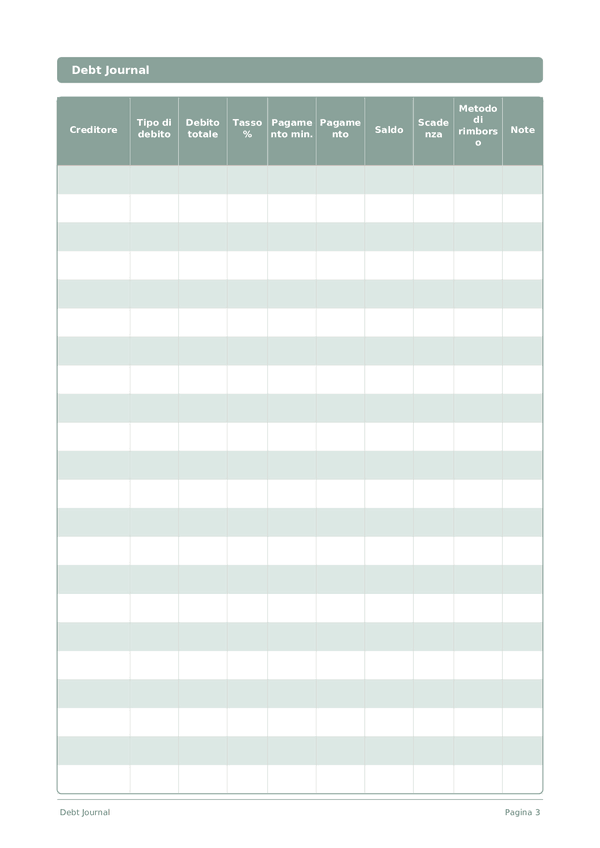
Diario dei Debiti
Monitora ed elimina i debiti con una chiara strategia di rimborso
Diario del Risparmio
Monitora le abitudini di risparmio quotidiane e avanzati verso i tuoi obiettivi finanziari
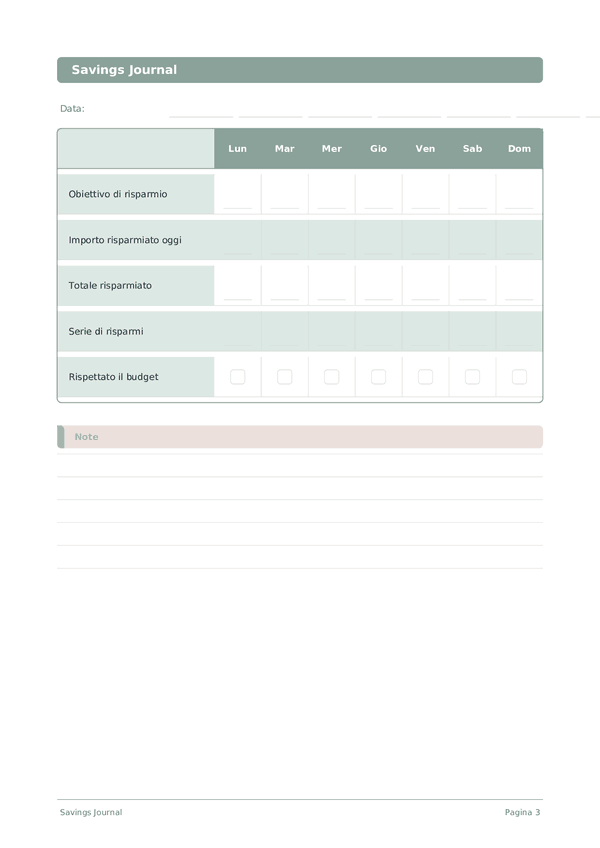
Scorri per ingrandire, trascina per spostare