Printable Bible Journal
Scripture, Observation, Application, Prayer — the SOAP method
A structured daily Bible study journal built around the SOAP method — Scripture, Observation, Application, Prayer. Each entry guides you from reading a passage to recording its meaning, applying it to your life, and responding to God in prayer.
Customize fields
Toggle fields on or off. Click the pencil to rename, or add your own fields.
Benefits
How to Use
What is this journal?
A Bible journal is a daily devotional practice that uses the SOAP method — Scripture, Observation, Application, and Prayer — to deepen your engagement with God's Word. Each entry guides you through reading a passage, noting what stands out, reflecting on its meaning, applying it to your life, and responding in prayer.
This journal is for anyone who wants to move beyond casual Bible reading into transformative study. Whether you follow a reading plan, study a specific book, or let the Spirit guide your daily selection, the structured format ensures you are not just reading words on a page but absorbing them into your life.
Biblical scholars and pastors consistently recommend the SOAP method because it combines intellectual study with personal application and spiritual response. Research on spiritual formation shows that believers who journal about scripture report deeper understanding, better retention, and more consistent application of biblical principles in daily life.
Filled example
Here's what a typical entry looks like when filled in:
How to fill in each field
Each day you'll find several labeled sections with lines for writing. Here's what each section is for:
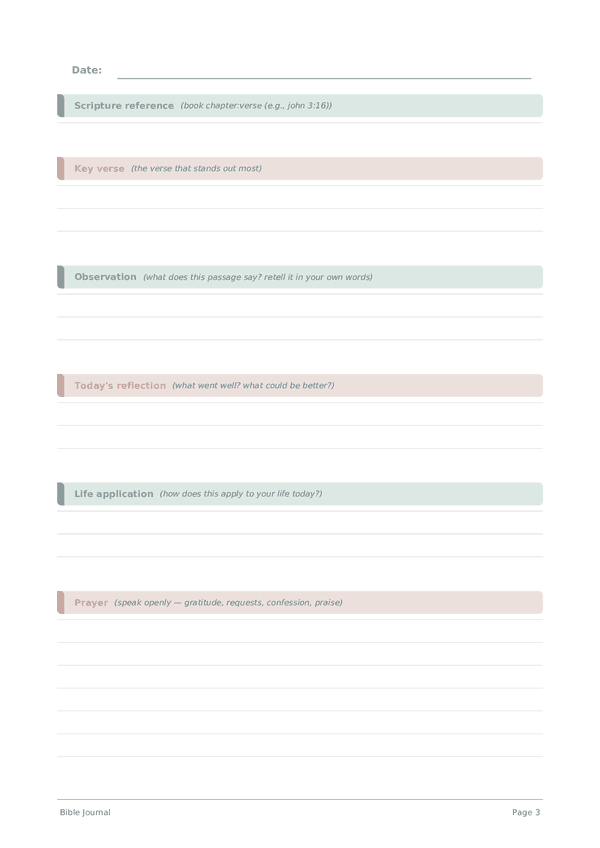
Scripture reference
Book chapter:verse (e.g., John 3:16)
Key verse
The verse that stands out most
Observation
What does this passage say? Retell it in your own words
Today's reflection
Look back at your day honestly. What went well? What could be better? This isn't about judgment — it's about learning and growing.
Life application
How does this apply to your life today?
Prayer
Speak openly — gratitude, requests, confession, praise
Tips for success
When and how often to write
Daily journaling aligns with the discipline of daily Scripture reading and forms a spiritual cornerstone. Morning entries pair naturally with devotional time, grounding your day in the Word. If daily feels overwhelming, commit to the same 4–5 days each week so the rhythm becomes habitual. Sunday entries that reflect on the sermon passage create continuity between corporate worship and personal study. During Advent, Lent, or other liturgical seasons, intensified daily journaling on seasonal readings can profoundly deepen the experience.
You Might Also Like
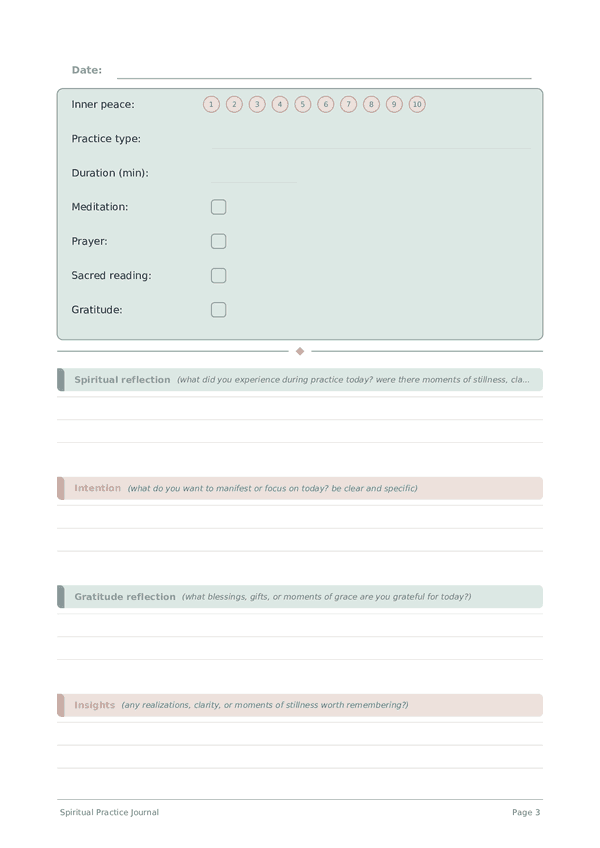
Spiritual Practice Journal
Nurture your inner life with daily practice and reflection
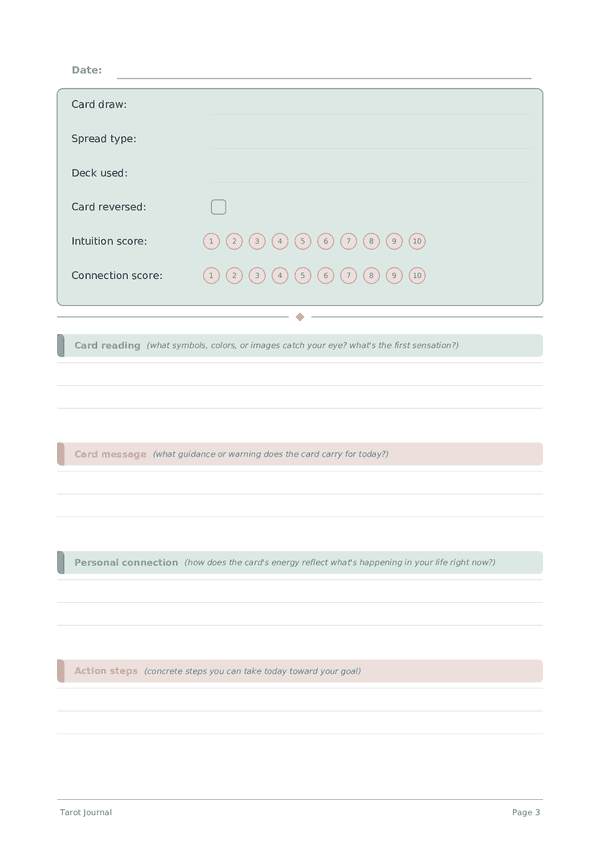
Tarot Journal
Track daily card draws, spreads, and intuitive insights
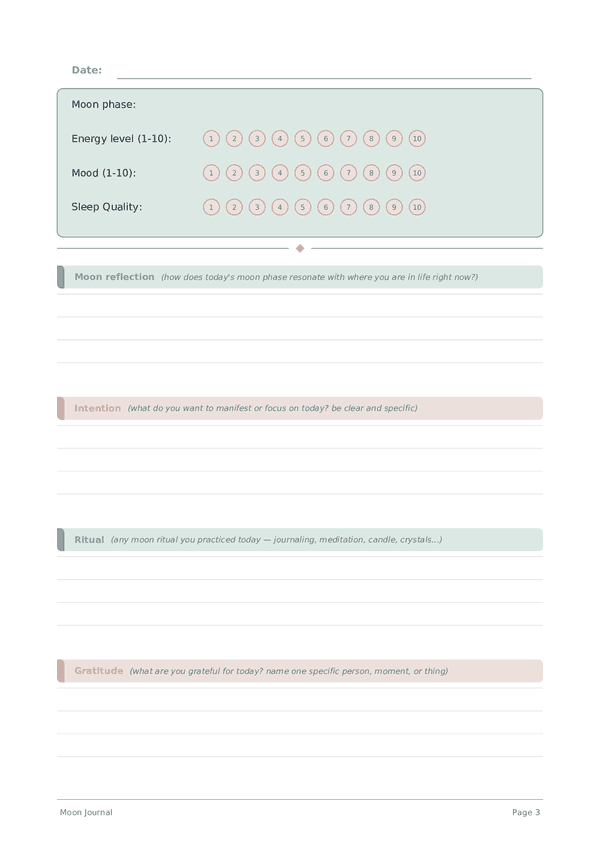
Moon Journal
Align with the lunar cycle — track, reflect, and release
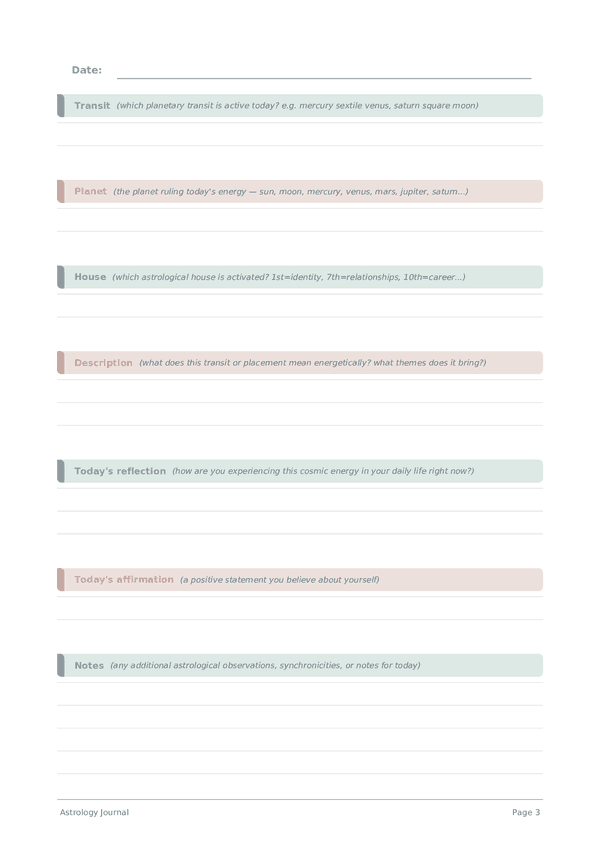
Astrology Journal
Decode the stars, track transits, and align your daily life with cosmic rhythms