Printable Prayer Journal
Draw closer to God through daily prayer
A structured daily prayer journal based on the A.C.T.S. framework — Adoration, Confession, Thanksgiving, and Supplication. Begin each entry with scripture, lift up prayers for others, record answered prayers, and close with personal reflection. This proven format guides you through a rich, balanced prayer life and creates a lasting record of your spiritual journey.
Customize fields
Toggle fields on or off. Click the pencil to rename, or add your own fields.
Benefits
How to Use
What is this journal?
A prayer journal is a daily devotional writing practice that structures your prayer life into intentional, reflective conversation with God. Following the ACTS framework — Adoration, Confession, Thanksgiving, and Supplication — each entry deepens your spiritual communion while creating a written record of your faith journey.
This journal is for anyone who wants to enrich their prayer life, whether you are a lifelong believer seeking deeper devotion or someone exploring a more structured approach to prayer. It creates space for praise, honest confession, gratitude, and intercession for others.
Spiritual directors and pastoral counselors have long recognized that written prayer engages the mind differently than spoken prayer alone. The practice of recording answered prayers over time builds a personal testimony of God's faithfulness, strengthening faith during seasons of doubt and providing a source of encouragement you can return to whenever you need it.
Filled example
Here's what a typical entry looks like when filled in:
How to fill in each field
Each day you'll find several labeled sections with lines for writing. Here's what each section is for:
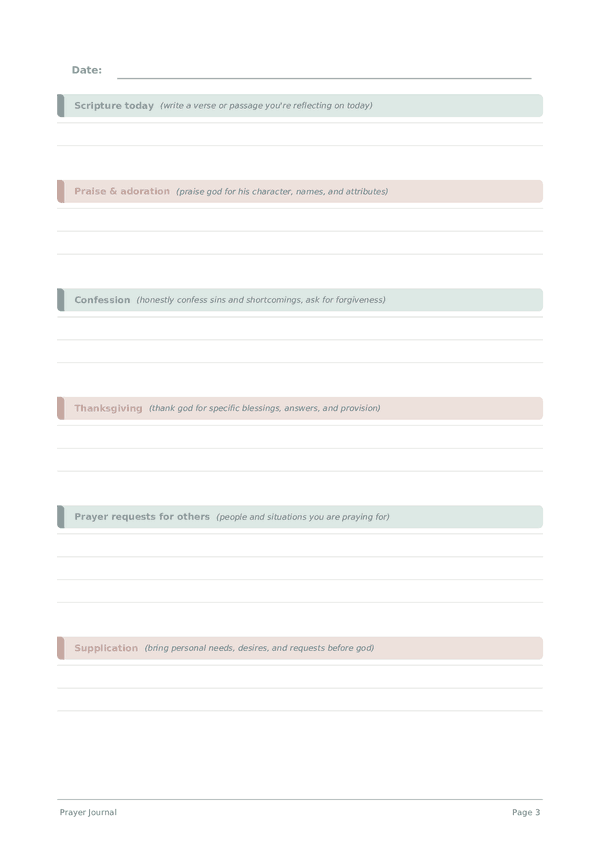
Scripture today
Write a verse or passage you're reflecting on today
Praise & adoration
Praise God for His character, names, and attributes
Confession
Honestly confess sins and shortcomings, ask for forgiveness
Thanksgiving
Thank God for specific blessings, answers, and provision
Prayer requests for others
People and situations you are praying for
Supplication
Bring personal needs, desires, and requests before God
Answered prayer
Record prayers that have been answered
Today's reflection
Look back at your day honestly. What went well? What could be better? This isn't about judgment — it's about learning and growing.
Tips for success
When and how often to write
Daily prayer journaling, ideally at the same time each day, establishes a sacred rhythm. Morning entries set spiritual intention for the day; evening entries offer reflection and gratitude. Even 10 minutes of written prayer creates more depth than 30 minutes of distracted mental prayer. Weekly, reread the past seven days to notice spiritual themes and movements. Many find that fasting days or sabbath observance are natural times for longer, more contemplative entries.
Frequently Asked Questions
What is the A.C.T.S. framework this Prayer Journal uses?
A.C.T.S. stands for Adoration, Confession, Thanksgiving, and Supplication — a long-established structure in Christian devotional practice for balanced prayer. The template expands it with scripture today, prayer requests for others, answered prayer, and reflection sections. Richard Foster's 'Celebration of Discipline' (HarperOne, 1978) and Henri Nouwen treat structured prayer as a discipline that deepens over years of faithful practice.
Why begin every entry with the scripture today field?
Anchoring prayer in scripture is a long-standing discipline in Christian tradition — Psalm 5:3, for example, frames morning prayer with God's word. Two lines is enough to record a verse and brief context. Foster (1978, 'Celebration of Discipline', HarperOne) treats this anchoring as a safeguard against prayer becoming a monologue of one's own preoccupations. The verse shapes everything that follows.
How is confession different from supplication in this template?
Confession (three lines) is honest naming of specific sin and seeking forgiveness — it precedes asking. Supplication (three lines) brings personal needs and petitions. The order matters in the A.C.T.S. tradition: adoration centers on God, confession clears obstacles, thanksgiving gives perspective, and then supplication asks. Keeping them separate prevents prayer from collapsing into a request list.
What goes in the answered prayer section, and why does it matter?
Record specific prayers you can identify as answered — including unexpected, partial, or unanswered ones that taught you something. Reviewing answered prayers strengthens faith through an evidence-based record of God's response over time. Foster (1978, 'Celebration of Discipline', HarperOne) argues that without this record, memory edits the story and prayer begins to feel fruitless. Three lines is enough for one or two specific items.
Is praying in writing more effective than silent prayer?
Writing serves attention and memory, not divine reception. James Pennebaker's expressive writing research shows that handwriting about meaningful material deepens emotional processing and recall. Harold Koenig at Duke University has documented associations between regular prayer practice and well-being. The journal supports consistency and review; silent prayer remains the broader practice this template structures, not replaces.
How do I use the prayer requests for others section?
Four lines accommodate several intercessions — list family, friends, your community, and specific situations. Henri Nouwen described intercession as standing in solidarity with others before God. Date your entries so you can revisit them in the answered prayer field weeks or months later. Avoid vague entries like 'pray for everyone'; specific names and needs create accountability and meaningful follow-up.
What is the most common mistake people make with the A.C.T.S. format?
Rushing through adoration and confession to get to supplication. Foster (1978, 'Celebration of Discipline', HarperOne) warns that a practice weighted toward asking distorts prayer into a wish list. Spend genuine time on adoration and thanksgiving before petitions. The sections are sized roughly equally at three lines each — deliberately encouraging proportion across all four A.C.T.S. movements.
How long does a complete A.C.T.S. entry take, and how often should I review it?
Twenty to thirty minutes is a sustainable pace for the eight sections. Henri Nouwen advised brief daily fidelity over occasional long sessions. A practical rhythm is weekly review of prayer requests for others against answered prayer, and monthly review of reflection notes to surface longer themes God is highlighting. This is a spiritual practice; for clinical mental health concerns, consult a licensed counselor or clinician.
You Might Also Like
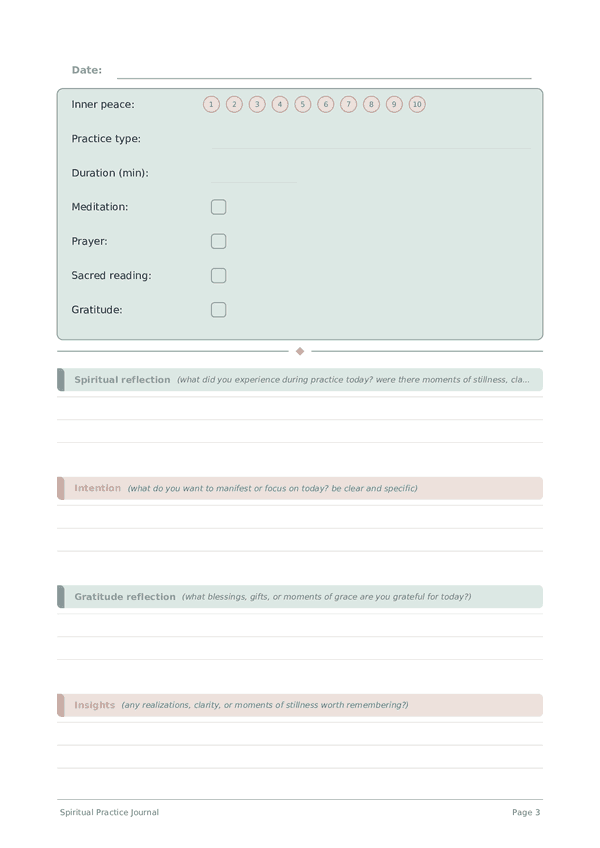
Spiritual Practice Journal
Nurture your inner life with daily practice and reflection
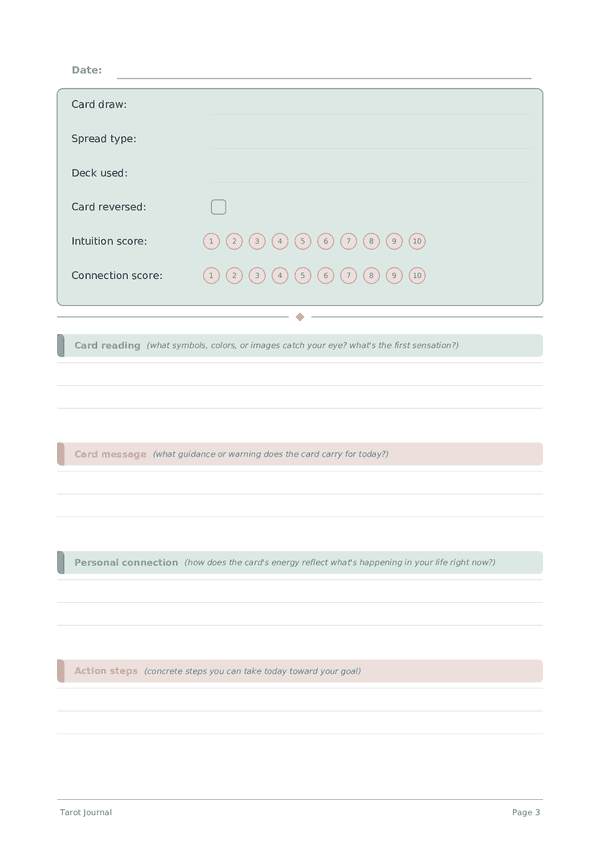
Tarot Journal
Track daily card draws, spreads, and intuitive insights
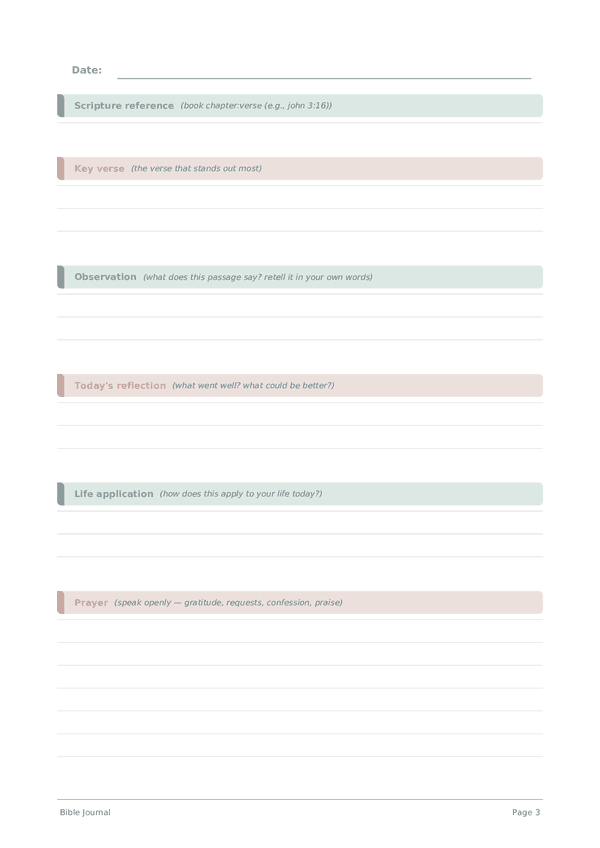
Bible Journal
Scripture, Observation, Application, Prayer — the SOAP method
Moon Journal
Align with the lunar cycle — track, reflect, and release
Scroll to zoom, drag to move