Printable Tarot Journal
Track daily card draws, spreads, and intuitive insights
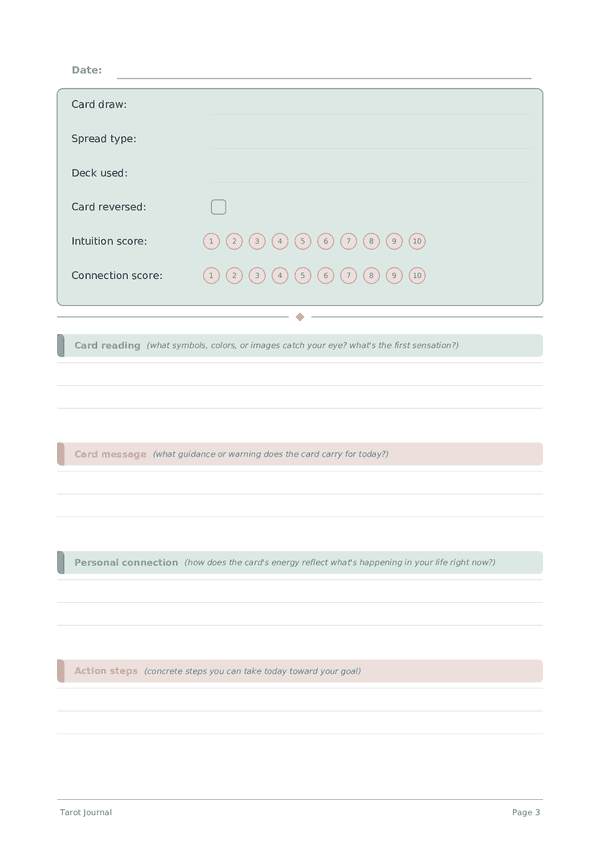
A structured daily practice for tarot readers of all levels. Each entry guides you to record your card draw and spread details, capture your first impressions and symbolic observations, explore the card's personal message, and reflect on how the reading connects to your life. Over time, you build a rich record of recurring cards, evolving interpretations, and patterns that deepen your intuitive reading practice.
Customize fields
Toggle fields on or off. Click the pencil to rename, or add your own fields.
Benefits
How to Use
What is this journal?
A tarot journal is a daily practice for recording and reflecting on your card readings, deepening your relationship with the tarot and your own intuition. By logging the cards drawn, spread type, and deck used alongside reflective writing about messages and personal connections, you build a rich archive of symbolic dialogue with your inner wisdom.
This journal is for tarot enthusiasts at any level — from beginners learning card meanings to experienced readers refining their interpretive skills. It serves as both a study tool and a spiritual diary, tracking how your understanding of each card evolves through personal experience rather than just memorized definitions.
Whether you view tarot as a spiritual tool, a psychological mirror, or a creative thinking framework, consistent journaling dramatically accelerates learning. Tracking patterns in which cards appear frequently, which spreads resonate most, and how readings connect to actual life events builds intuitive pattern recognition that cannot be gained from studying books alone.
Filled example
Here's what a typical entry looks like when filled in:
How to fill in each field
The top of each page has quick-fill fields (ratings, checkboxes, numbers). Below that is a lined section for writing. Here's what each field means:
Card draw
Which card did you draw today? Write the name and number of the card
Spread type
Three-card, Celtic Cross, single draw...
Deck used
Which tarot deck did you use?
Card reversed
Was the card upright or reversed? Note the orientation and how it felt
Intuition score
How strong was your intuitive connection during the reading? Rate from 1 to 10
Connection score
How deeply did the card's message resonate with you? Rate from 1 to 10
Card reading
What symbols, colors, or images catch your eye? What's the first sensation?
Card message
What guidance or warning does the card carry for today?
Personal connection
How does the card's energy reflect what's happening in your life right now?
Action steps
Break your goal into concrete next actions. What exactly will you do, when, and how? The more specific, the better.
Lesson learned today
Capture one insight from today's experience. Over time, these lessons become a personal wisdom library.
Tips for success
When and how often to write
Pull and journal about a daily single-card draw each morning to build interpretive fluency and track evolving themes. Do fuller spreads (3-card or Celtic Cross) weekly or when facing a specific decision or transition. After major life events, a detailed reading and entry can provide valuable perspective. Monthly, review your card frequency log and past readings to assess accuracy and growth. Avoid pulling repeatedly on the same question — if you feel the urge, journal about why the first answer was unsatisfying instead.
You Might Also Like
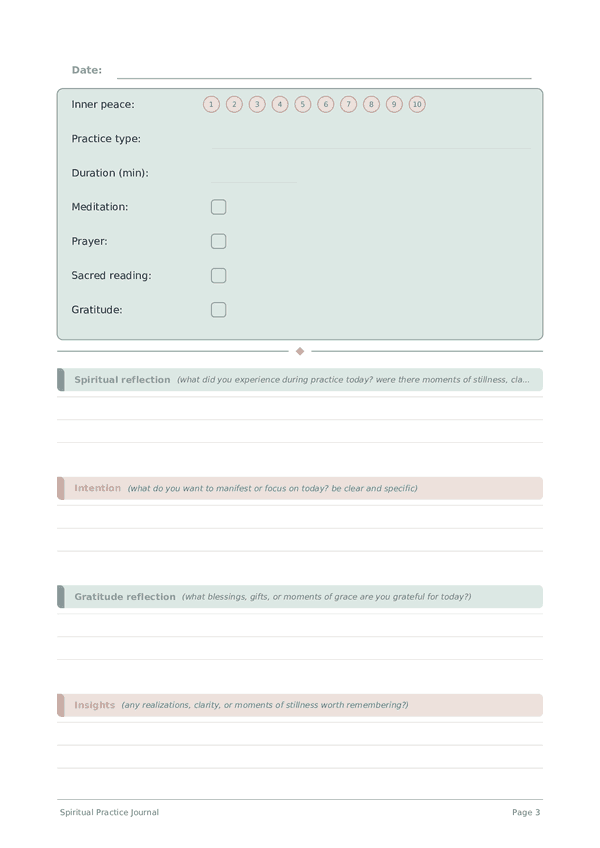
Spiritual Practice Journal
Nurture your inner life with daily practice and reflection
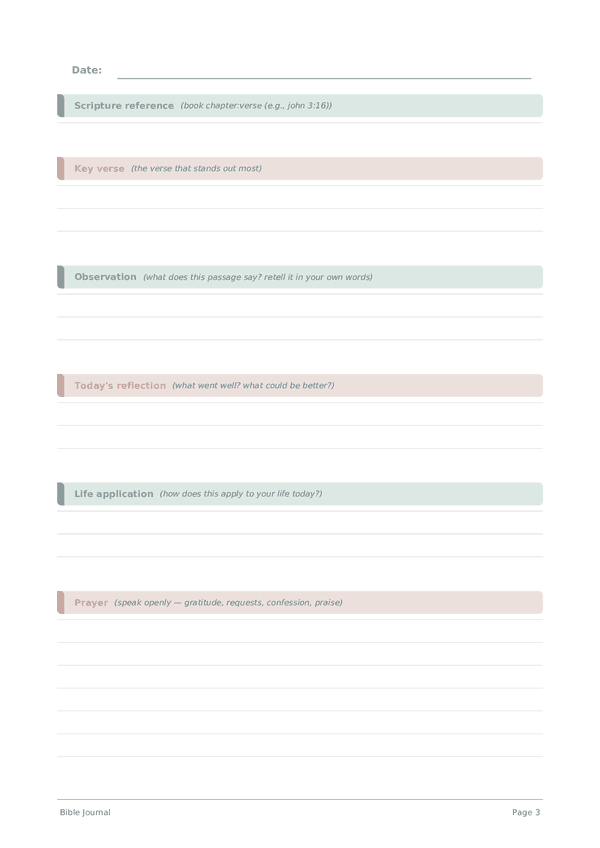
Bible Journal
Scripture, Observation, Application, Prayer — the SOAP method
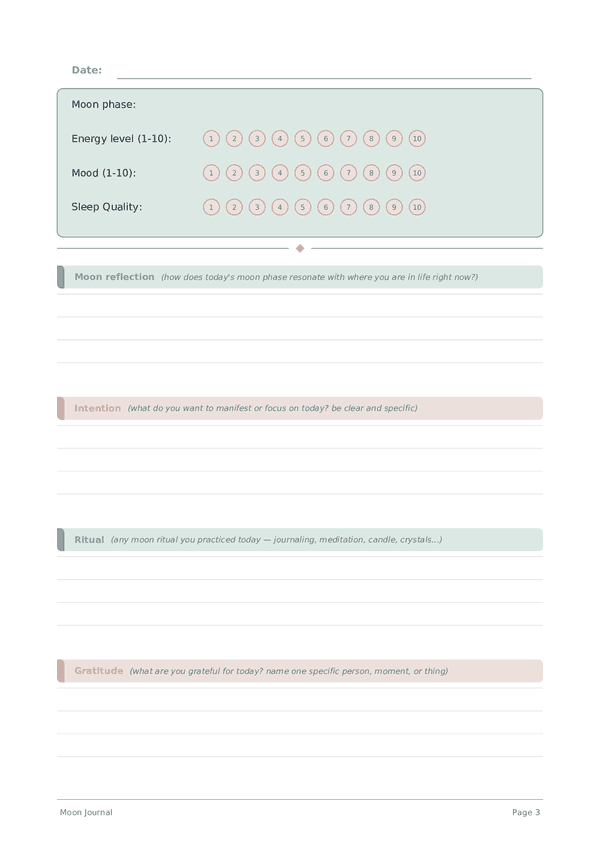
Moon Journal
Align with the lunar cycle — track, reflect, and release
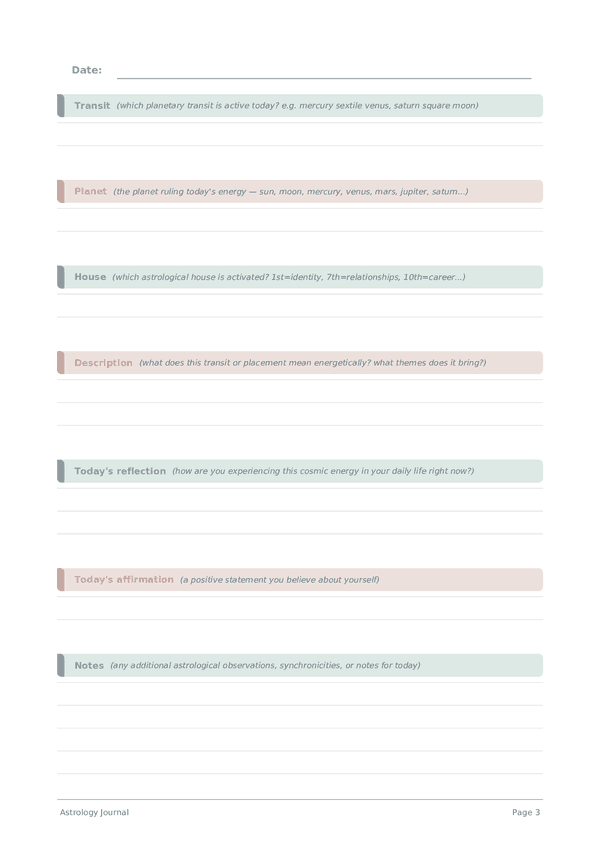
Astrology Journal
Decode the stars, track transits, and align your daily life with cosmic rhythms