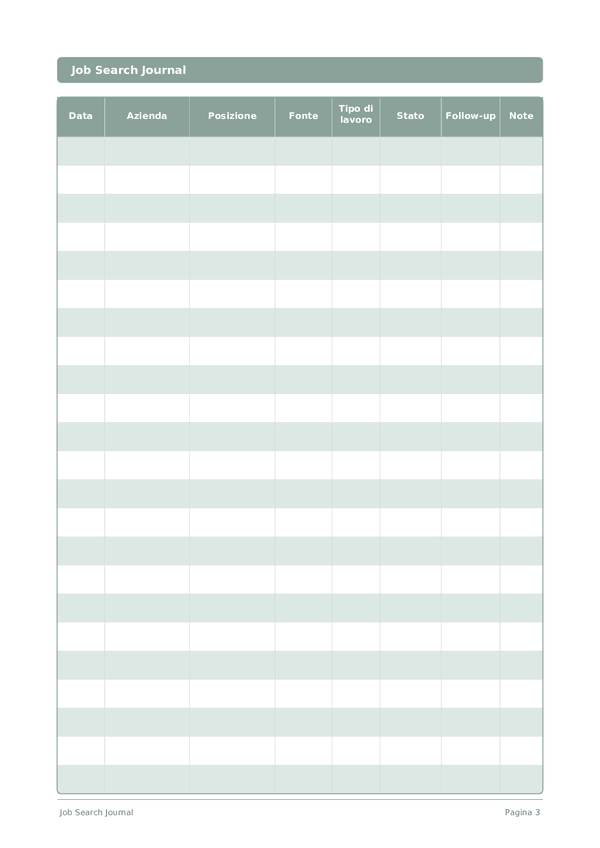
Printable Diario della Ricerca di Lavoro
Monitora ogni candidatura, colloquio e follow-up in un registro organizzato
Personalizza campi
Attiva o disattiva i campi. Clicca la matita per rinominare, oppure aggiungi i tuoi campi.
Cos'è questo diario?
Questo è un diario a registro tabellare — ogni pagina contiene una tabella strutturata con colonne per registrare i dati. Perfetto per tenere traccia di spese, allenamenti, letture o qualsiasi attività che beneficia di voci organizzate e confrontabili.
Come compilare ogni campo
Ogni pagina è una tabella con colonne. Compila una riga per ogni voce. Ecco a cosa serve ogni colonna:
Data
Scrivi la data di oggi. Questo ancora la tua voce nel tempo e aiuta quando si rivedono le voci in seguito.
Azienda
Nome dell'azienda o dell'organizzazione
Posizione
Titolo della posizione lavorativa per cui hai fatto domanda
Fonte
Libro, corso, video, articolo, persona...
Tipo di lavoro
Da remoto, ibrido, in sede, part-time, a contratto...
Stato
Candidato, Colloquio telefonico, Colloquio, Offerta, Rifiutato, Ritirato...
Follow-up
Quando inviare un'e-mail di follow-up
Note
Aggiungi qualsiasi contesto o pensiero aggiuntivo. Questa colonna tuttofare è per tutto ciò che non si adatta altrove ma potrebbe essere utile in seguito.
Consigli per il successo
Quando e con quale frequenza scrivere
Aggiungi voci man mano che gli eventi accadono durante il giorno. Per i registri finanziari, annota ogni transazione immediatamente. Per i registri di attività, compila dopo ogni sessione. Fai una revisione settimanale o mensile per analizzare i tuoi dati ed estrarre intuizioni.
Domande frequenti
Quali valori di stato dovrei usare nella colonna stato?
Standardizza un vocabolario breve — Inviata, Screening telefonico, Colloquio, Offerta, Rifiutata, Ritirata, Nessuna risposta. Il Bureau of Labor Statistics degli Stati Uniti (2023, Occupational Outlook Handbook) descrive le fasi di selezione tipiche utilizzate dalla maggior parte dei datori di lavoro. La coerenza ti permette di classificare e contare gli esiti per fonte nel tempo. Con 15 righe per pagina, scorrere la colonna stato mostra immediatamente la forma della pipeline.
Come uso la colonna fonte per migliorare la mia ricerca di lavoro?
Traccia esattamente da dove è arrivata ogni candidatura — referenza, LinkedIn, sito aziendale, recruiter, job board. Dopo 20–30 candidature, conta i colloqui per fonte. Il Bureau of Labor Statistics degli Stati Uniti (2023, Occupational Outlook Handbook) mostra costantemente che le referenze producono tassi di assunzione più alti rispetto alle candidature a freddo. I dati nella tua colonna fonte ti dicono dove investire la prossima ora di ricerca.
Quando dovrei impostare la data follow up dopo aver inviato la candidatura?
Cinque-sette giorni lavorativi dopo l'invio è un default ragionevole se non hai altri segnali. Il Dipartimento del Lavoro degli Stati Uniti (CareerOneStop.org, 'Follow Up After Applying') raccomanda un cortese sollecito se non hai notizie. Imposta la data follow up quando registri la candidatura, così non diventa mai 'un giorno'; la colonna data rende azionabile la revisione settimanale.
In cosa si differenzia questo diario da un foglio di calcolo o da un tracker su job board?
La carta impone un impegno che una scheda chiudibile non produce. Thaler & Sunstein, 'Nudge' (Yale University Press, 2008) descrivono l'attrito fisico come una caratteristica comportamentale positiva. Le otto colonne impongono anche gli stessi campi ogni volta — data, azienda, posizione, fonte, tipo lavoro, stato, data follow up, note — così la revisione settimanale confronta dati omogenei sull'intera scheda da 15 righe.
Cosa dovrei scrivere nella colonna note?
Nomi degli intervistatori, retribuzione discussa, scadenze dei compiti da svolgere a casa, e qualsiasi segnale specifico — positivo o segnale di allarme. Il Dipartimento del Lavoro degli Stati Uniti (CareerOneStop.org, 'Job Interview Tips') raccomanda di registrare i dettagli del colloquio immediatamente dopo ogni conversazione. La colonna note stretta impone la sintesi; se hai bisogno di più spazio, segna una stella e continua sul retro della pagina.
Quante candidature a settimana sono realistiche?
La qualità batte la quantità per la maggior parte dei ruoli. Il Bureau of Labor Statistics degli Stati Uniti (2023, Occupational Outlook Handbook) mostra che le ricerche di lavoro mediane coinvolgono decine di candidature nel corso di settimane. Un ritmo comune è 5–10 candidature ben mirate a settimana con lettere di presentazione sostanziali. La pagina da 15 righe copre circa due settimane a quel ritmo — abbastanza breve da rivedere senza perdere slancio.
Quando dovrei rimuovere una candidatura dal monitoraggio attivo?
Dopo quattro settimane senza risposta, considera la candidatura chiusa a meno che una data follow up non ti induca diversamente. Il Dipartimento del Lavoro degli Stati Uniti (CareerOneStop.org, 'Follow Up After Applying') osserva che la maggior parte dei datori di lavoro risponde entro tre-quattro settimane. Segna lo stato come 'Nessuna risposta' e sposta l'attenzione sulle conversazioni attive invece di inseguire il silenzio — il tuo tempo è la risorsa limitante.
Perché la colonna tipo lavoro è importante per l'analisi?
Le candidature da remoto, ibride e in presenza convertono a tassi diversi e hanno retribuzioni diverse. Il Bureau of Labor Statistics degli Stati Uniti (2023, American Time Use Survey, dati sul telelavoro) monitora la prevalenza del lavoro da remoto per occupazione. Registrare il tipo lavoro ti permette di confrontare i tassi di colloquio tra le modalità ed evitare di sprecare sforzi in mercati non adatti — ad esempio candidandoti a ruoli in presenza quando hai bisogno del lavoro da remoto.
Potrebbe piacerti anche
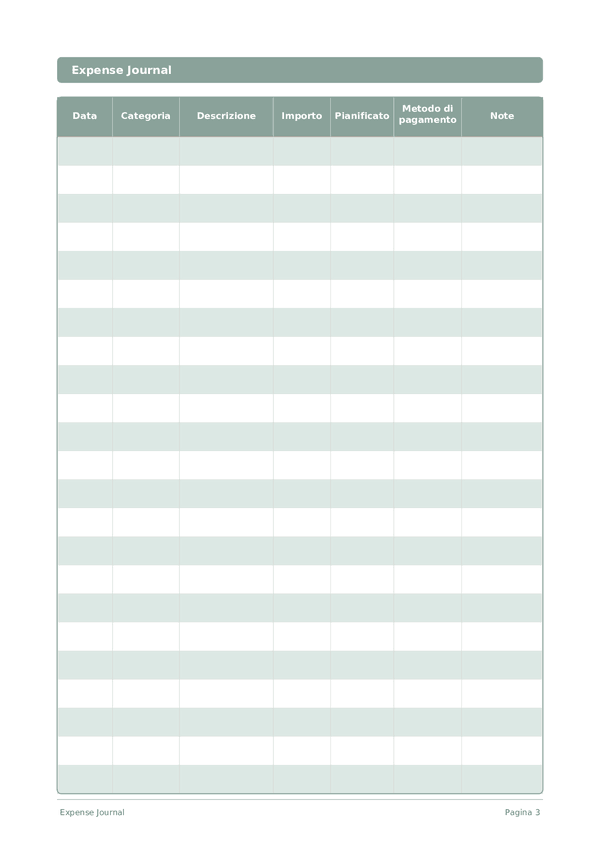
Diario delle Spese
Monitora ogni euro per prendere il controllo delle tue finanze
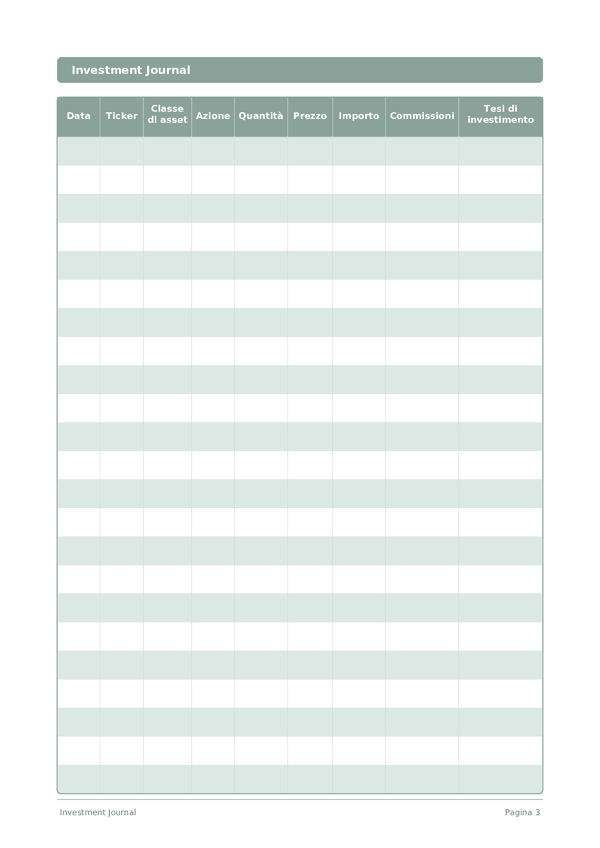
Diario degli Investimenti
Monitora le operazioni, analizza le decisioni e fai crescere il tuo portafoglio
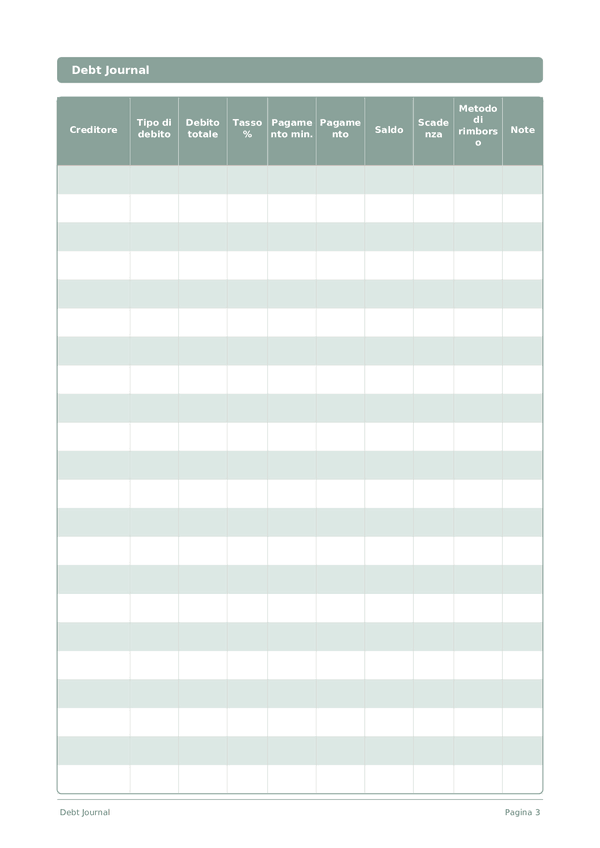
Diario dei Debiti
Monitora ed elimina i debiti con una chiara strategia di rimborso
Diario del Risparmio
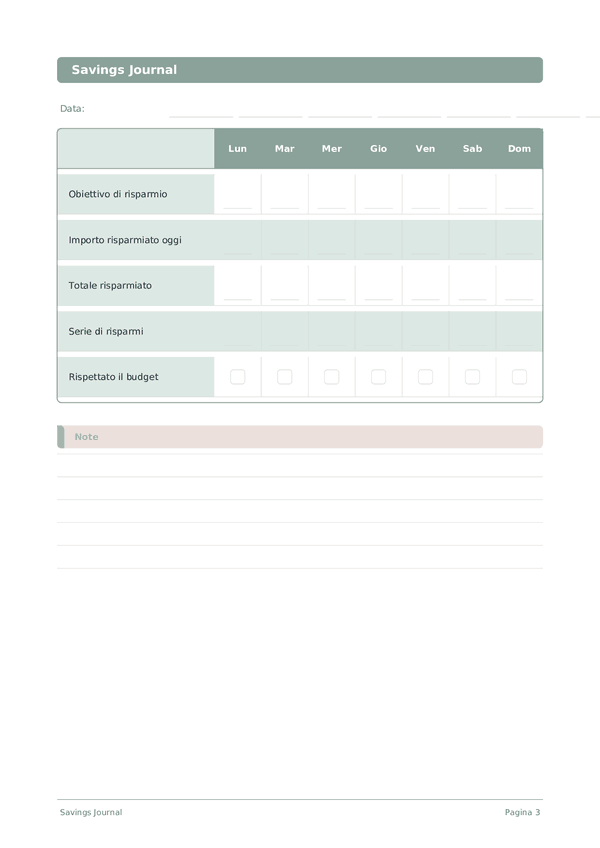
Monitora le abitudini di risparmio quotidiane e avanzati verso i tuoi obiettivi finanziari
Scorri per ingrandire, trascina per spostare